Introduction
As we move into 2025, we see customers across the world more concerned about live chat response time. In the Middle East region, the live chat response time serves as a key performance indicator for brands focused on digital customer engagement and service. The rapid digital transformation across the Gulf Cooperation Council (GCC) countries, particularly those in the UAE, Saudi Arabia, Qatar, and Kuwait, has resulted in response times being elevated from simply a support KPI to a key component of measuring brand performance, customer satisfaction, and differentiation against competitors. This blog underlines key trends related to live chat response expectations in the Middle East. It elaborates targeted service sectors where customers expect a better live chat response.
Importance of Response Time for Middle Eastern Customers
The expectations of customers continue to change at a rapid pace, with consumers being able to compare almost every brand with the quickest digital experiences they have had. For example, a consumer may have had an experience with an instant chat response, a response to a push notification, or even through real-time social media messaging. As such, live chat response time within the Middle East will be an important element of any customer experience (CX) strategy.
Customers from multiple sectors (e.g., e-commerce, banking, travel, healthcare) expect to receive information very quickly after they have clicked on a chat widget or opened a messaging channel; therefore, live chat is quickly becoming the preferred means for many customers due to its immediacy and response time capability.
A Glimpse of Customer Experience Benchmarks
Customers desire quick response times when utilizing live chat to reach a customer service agent. It is important to know that an initial contact time of less than 30 seconds is expected to deliver an “excellent” standard of service. Based on a global response time standard developed in 2021, it is found that over 80% of customers expected a response time to their request/concern within 3 minutes (or less) during an online chat interaction. Customers generally request even faster response times.
The above-mentioned typical response time ranges from under 60 seconds to 3 minutes (or more). Ultimately, there is a massive percentage of customers who will abandon their request (and move on without your assistance) if their request has not received any reply in 3 minutes or more. Live chat is regarded as an “on-demand” communication method, thus providing the greatest expectations for response speed. Response time is important in all regions of the world, but it is considered even more important in the Middle East due to cultural and economic differences.
Regional Trends: Middle East CX Expectation
Mobile-First, Real-Time Consumers

Middle Eastern Consumers are primarily mobile users. Therefore, mobile messaging applications such as WhatsApp have created an immediate response time. Therefore, customers will naturally expect the same level of instantaneousness when communicating with live chat through both company websites and mobile applications.
E-Commerce and Conversion Optimization
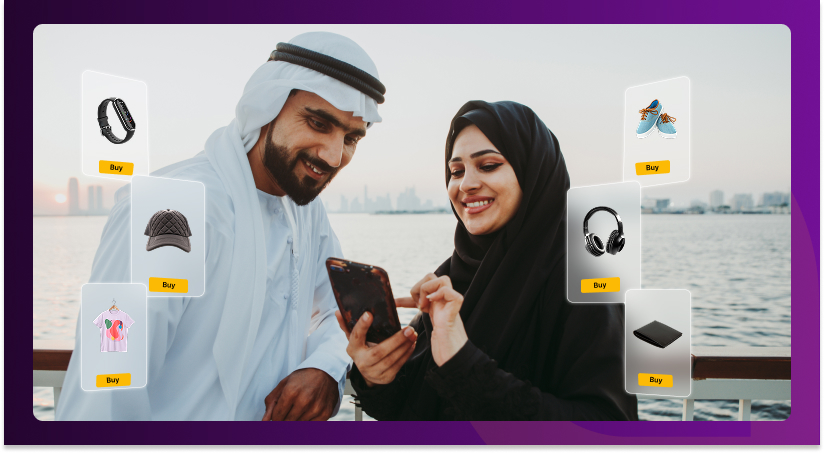
Since E-Commerce is a growing sector in the Middle East, customers expect a real-time and proactive response from live chat support provided by the platforms. Most brands in the United Arab Emirates (UAE) and Saudi Arabia have implemented live chats as a way to increase conversions on their websites. By answering buying questions instantly, live chat integration helps eliminate shopping cart abandonment and delayed customer purchase decisions.
Banking, Fintech, and Trust

Since Middle Eastern customers are more familiar with financial institutions than other markets, they expect a quick response in all areas. Therefore, when a financial institution addresses a customer’s request, the customer expects their request to be fulfilled as soon as possible without having to wait in long lines or for extended periods. The result of this is that marketing teams utilizing live chat are able to build customer trust and give customers the security to know that they can continue to use the same company over and over again.
Travel & Hospitality Demand Real-Time Solutions
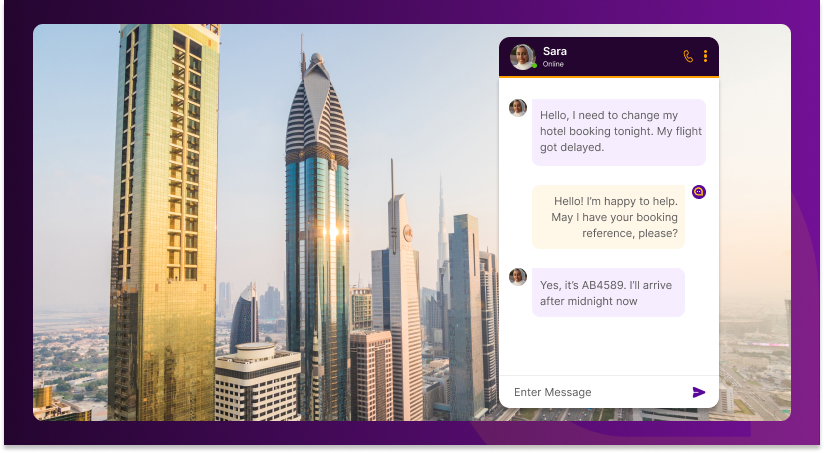
Customers of the travel and hospitality industry also expect an effective live chat response time from companies. Many companies within this category, including airlines such as Emirates and Etihad Airways, depend upon their customer service agents answering questions in real-time, including use cases such as booking changes, check-in Issues, and rewards program questions.
Key Benchmarks to Aim For
Here’s how every business can set expectations for how long to wait until a response is received.
| Response Time Window | Customer Satisfaction Impact |
| < 10 seconds | Extremely high satisfaction levels |
| 10 – 30 seconds | Very strong and engagement preserving |
| 30 – 60 seconds | Good – acceptable in most use cases |
| 1 – 3 minutes | Average – risk of frustration. |
| > 3 minutes | Poor – likely to increase abandonment |
For all brands operating in the region, providing responses within 30 seconds demonstrates an inherent eagerness to be responsive, and this sense of urgency resonates with the needs of every native-born digital user within GCC (Gulf Cooperation Council) countries.
How Businesses Can Meet These Expectations
To meet these expectations with top-tier customer satisfaction levels, many companies are currently utilizing the following methods:
24/7 Live Chat Support in Real-Time

For Middle Eastern customers, companies are putting in all-out efforts to enhance engagement with customers. To maintain constructive engagement, businesses should ensure 24/7 live chat support for customers. The real-time conversation can help meet the expectations: instant support, empathic response, and trusted conversation.
Intelligent AI Chatbots
AI-driven bots allow businesses to “automate” the initial contact acknowledgement and can respond to ~80% of common questions without the need for any live agents. This frees them up to provide personalized support for more complex questions/queries.
Automated Routing or Smart Triggering
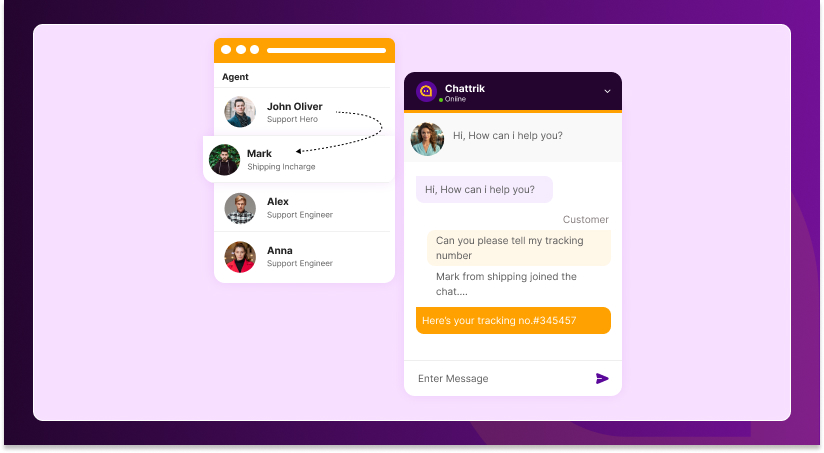
Many chat solutions allow businesses to “route” incoming chats automatically for more accurate, faster reply times based on the specific query type or the user’s past activity/behavior patterns.
Prewritten Responses
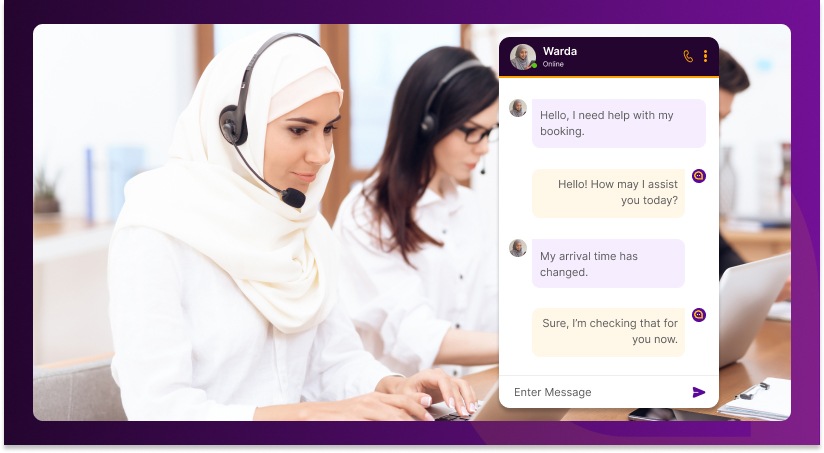
Agents utilizing prewritten responses to common FAQs save plenty of time as compared to responding to each query as it comes in via message.
Real-Time Chat Tracking
By monitoring key metrics related to real-time chat engagement (like customer satisfaction and average response times), companies can identify gaps in their processes and determine solutions to improve future contacts with customers.
Conclusion
Customers across the world prioritize instant response as far as customer service is concerned. Middle Eastern customers consider response time an essential element for any business. It’s not simply a measurement of performance but rather a way for companies to set themselves apart from their competition. The ability to deliver quick and efficient chat support improves customer satisfaction and enhances sales conversion rates. It has become a customer requirement across multiple industries, including retail, banking, and other sectors.
Companies that continue to provide quality service and exceed customers’ expectations regarding response times will have a significant advantage over their competitors in rapidly evolving digital markets. If you want to enhance your business with features of proactive live chat response time, Try Chattrik and get 100% customer satisfaction in the Middle East region.
 Table of Content