Imagine dialing your doctor’s office – and hearing the hold music for 25 minutes straight. Or filling out pages of information online for a simple question about a prescription. For countless patients across the globe, this is an all too familiar reality. But it doesn’t have to be. Live chat is quietly revolutionizing the way healthcare providers connect with patients – enabling interactions that are faster, more humane, and considerably more effective. In this post, we break down precisely how – and why organizations in healthcare that are not leveraging live chat are being left dangerously behind.
1. The Communication Crisis in Modern Healthcare
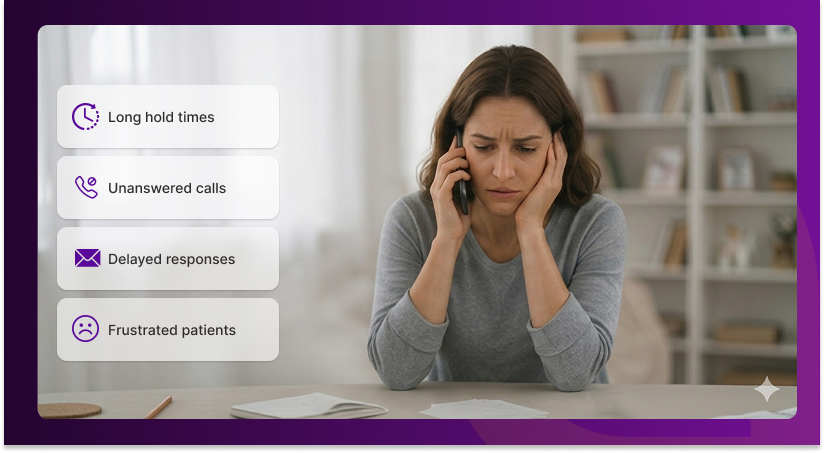
As arguably one of the most critical industries in the world, healthcare struggles to deliver on the communication front, consistently topping the list of patient frustrations. Today’s patients are digital-savvy, pressed for time, and have high expectations. They book flights in one click, instantly access customer support from their bank, and order groceries via a chat interface. However, the moment they need to connect with their doctor’s office, they’re sent hurtling back into the 1990s.
Dropped phone calls, unanswered voicemails, email inquiries that sit in an inbox for days… These are everyday experiences for millions. Rooms filled with patients who could have had their questions answered online in seconds. This disconnect isn’t just an inconvenience, it has profound effects on patient satisfaction, outcomes, and an organization’s reputation.
Accenture research reveals that 77% of patients say receiving quick answers to their questions is an important consideration when selecting a healthcare provider. Yet, most clinics and hospitals continue to operate on the same, outdated communication channels, leaving patients frustrated and disengaged.
Thankfully, there is a solution-and innovative healthcare providers around the world are already implementing it. Live chat software is emerging as the single most effective method for transforming patient communication, reducing wait times from hours to seconds, and delivering the smooth, enjoyable experience patients now expect.
2. What is Live Chat for Healthcare?
Live chat for healthcare is a web-based, real-time communication tool that enables patients to instantly connect with a clinic’s support staff, administrative team, or an automated chatbot, either directly through the clinic’s website or patient portal. Unlike a phone call, live chat doesn’t involve being put on hold. It’s instantaneous like a text message, but unlike a text message, it’s real-time, and unlike a visit to the doctor, it doesn’t involve commuting and sitting in a waiting room.
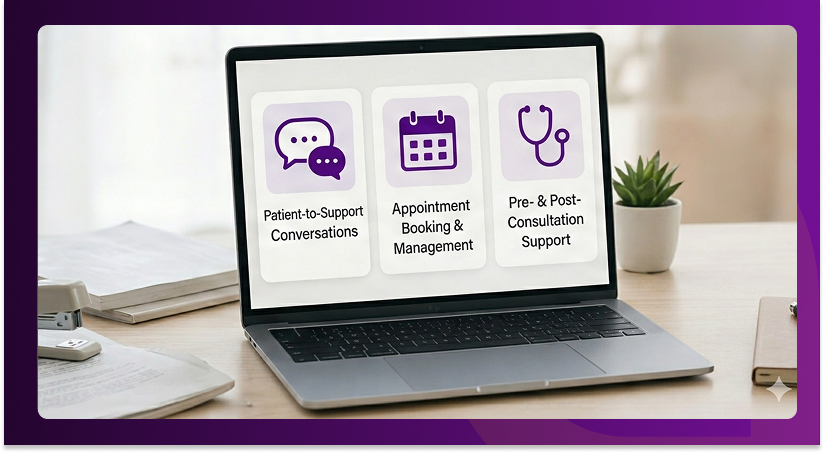
At its heart, healthcare live chat software allows for three types of interactions:
Patient to Support Agent/Chatbot Communications: This allows patients to submit questions regarding their appointment, billing, location, insurance, or any other administrative query, and receive an immediate, accurate response either from a live agent or an intelligent chatbot.
Appointment Booking and Management: Patients can schedule, reschedule or cancel appointments through a chat window, bypassing the frustrating wait times on the phone and complex voice menus.
Pre and Post Consultation Communication: This allows healthcare providers to securely share post-visit follow-up care instructions, test result notifications, or medication reminders with their patients in a clear, simple, conversational format.
The real strength of the live chat systems currently available is the seamless integration of AI capabilities. Platforms such as Chattrik not only manage communication, but also help providers interpret patient intent, anticipate queries, and respond in an empathetic, personalized tone-even when the system is automated. This goes beyond a convenient conversation; it’s about building the critical trust needed in healthcare.
3. Why the Numbers Don’t Lie
Still not convinced? The data is overwhelming. Patient expectations regarding digital communication have shifted dramatically, and healthcare providers failing to meet these new expectations risk losing patients to competitors who offer a better experience.
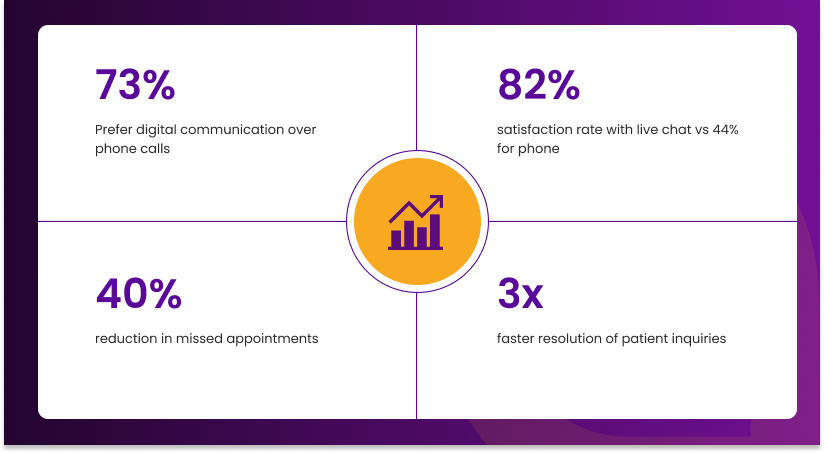
- 73% of patients prefer to communicate digitally rather than by phone for non-urgent issues
- 82% satisfaction rate among live chat users compared with 44% among phone support users
- 40% drop in missed appointments when automated chat reminders are implemented
- 3x faster resolution of patient queries with live chat compared to phone or email
Beyond patient satisfaction, live chat also has a significant impact on operational efficiency. Your healthcare staff is currently wasting countless hours on repetitive, routine questions that could easily be answered by live chat technology-questions such as “What are your opening hours?”, “Which insurance providers do you accept?”, or “How should I prepare for my colonoscopy?”. Freeing up your clinical team’s time by allowing them to focus on critical patient care is a crucial element to consider.
“How much time does it cost you for a nurse to give directions over the phone, when they could be caring for a patient?”
4. Key Benefits of Live Chat in Healthcare
The advantages of incorporating live chat into your healthcare organization extend beyond a simple improvement in convenience. Here is a comprehensive breakdown of why providers from sole practitioners to large hospital networks are adding live chat to their communication strategies.
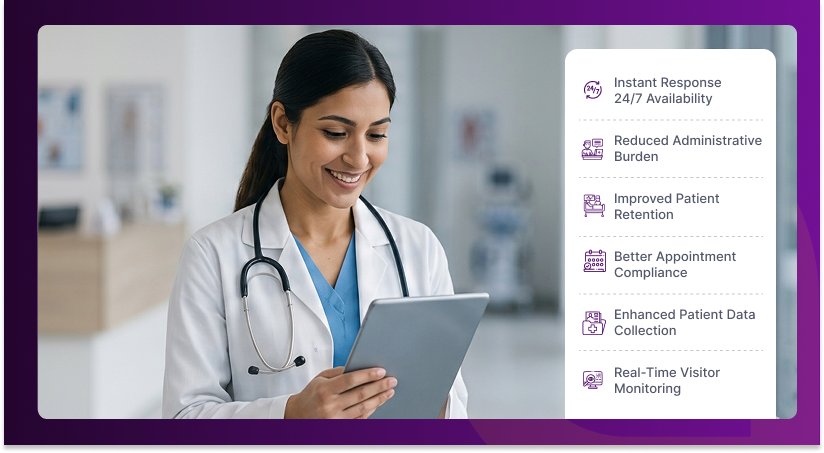
Instant Response, 24/7 Availability
Patient concerns do not necessarily happen during normal business hours. From asking a question about their medication at 11 p.m. To reaching out to a specialist’s office on a Saturday morning, live chat can fill this gap. Intelligent automation can resolve common patient inquiries at any time, while also seamlessly routing urgent matters to the appropriate human staff member.
Reduced Administrative Burden
One of the most significant — and often overlooked — benefits of live chat is the dramatic reduction in administrative workload. When patients can self-serve common queries through a chat interface, front-desk staff spend less time on repetitive phone calls and more time on tasks that genuinely require human attention. Studies show that healthcare practices using live chat systems report up to a 35% reduction in inbound call volume within the first three months of implementation.
Improved Patient Retention and Loyalty
One of the most significant-yet often unrecognized-benefits of live chat for healthcare providers is the drastic reduction in administrative tasks. Patients can self-service their basic requests and questions, freeing up front-line staff to handle matters that truly require a human touch. A recent study indicates that live chat users have reduced call volumes by as much as 35% in the first three months.
Better Appointment Compliance
patient loyalty is highly correlated to communication quality. Patients that feel heard, quickly assisted, and respected are significantly more likely to return and refer friends or family members to a provider. Live chat fosters true connection in even the most basic of interactions.
Enhanced Patient Data Collection
Missed appointments are costly for healthcare providers and patients alike, costing the industry billions of dollars each year and leading to delayed treatment. Live chat platforms can schedule, confirm, or reschedule appointments on behalf of patients, and provide automated reminders and appointment instructions that will be viewed and acted upon far more readily than an email or an unfamiliar phone call.
Real-Time Visitor Monitoring
A live chat system allows for an information exchange even before the conversation begins by using pre-chat forms, which can capture patient information such as name, date of birth, and reason for inquiry. This information can then be routed directly to the healthcare provider’s CRM or patient management system, saving staff considerable data entry time and minimizing the potential for errors.
5. Real-World Use Cases Across Healthcare Settings
Not all healthcare contexts are the same – live chat is perfectly adaptable to suit the specific communication needs of different types of healthcare providers, as seen below:
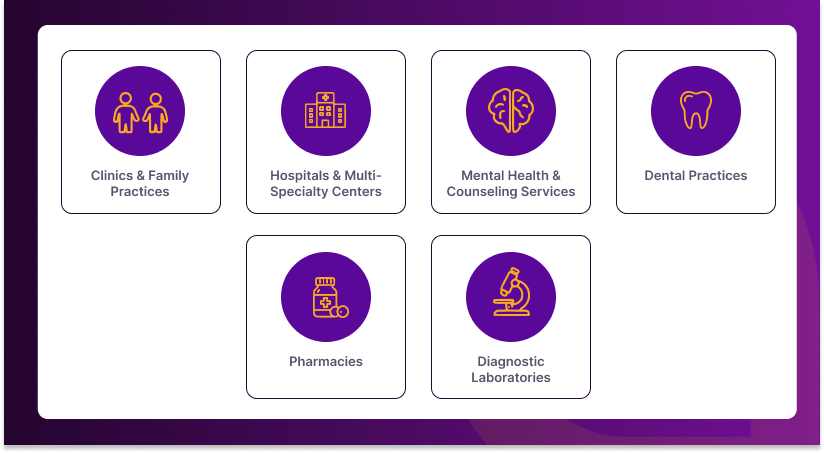
General Clinics and Family Practices
As a first-line of interaction with patients visiting a practice, live chat can prove extremely beneficial for General Clinics and Family Practices. A patient visiting the website for an inquiry is greeted not by the impersonal menu of an old telephone, but by a chat agent ready to guide them to the correct service or information that they require. This could include questions pertaining to scheduling appointments, prescription refills, follow-up of lab results, or even health queries that do not necessitate an appointment with the doctor.
Hospitals and Multi-Specialty Centers
When it comes to hospitals and other large healthcare institutions, the most pressing need is the quick and correct routing of patients to the suitable specialty. Live chat, powered by intelligent triage, enables patients to explain what they need with a direct connection to the appropriate department and specialists. This reduces unnecessary confusion for both the patients as well as their attendant at a large hospital’s central reception.
Mental Health and Counseling Services
The need for constant and easy communication is paramount in the field of mental health and counseling. As potential patients may be suffering from anxiety, calling a phone with multiple options to reach out for mental help might be too daunting. Live chat provides a less invasive way to initiate contact-the chat service is a text-based solution that many feel more comfortable with than talking on the phone. This way, the initial points of contact are better handled, giving the counselors information to further assist patients on their way to recovery.
💡 Chattrik insight- 28% of live chat inquiries that arrive at mental health practices are with first-time patients – the ease of communication, we believe, allows these to finally take that step toward seeking help.
Dental Practices
It is a well known fact that anxiety has played a significant role in why patients do not visit dentists as often as they should-this problem stems from before they even set foot inside the clinic! Live chat addresses many of the patient’s worries about procedures, pricing, and even pain management with a calm and understanding persona. By having live chat services available on their website, a dental practice will notice an increase in potential patients calling-and those calling after getting their questions answered will be much less anxious.
Pharmacies and Diagnostic Laboratories
Pharmacies in Pakistan handle countless medication related inquiries on a daily basis. Instead of diverting skilled pharmacists away from essential tasks, live chat is available to efficiently deal with all the information that is available for patients (medication availability, interactions, price, refill status etc.), which is not readily apparent from the product packaging. Diagnostic laboratories use it to ensure all patients understand the tests available and what needs to be done beforehand in order to take them.
6. How Chattrik Powers Healthcare Communication
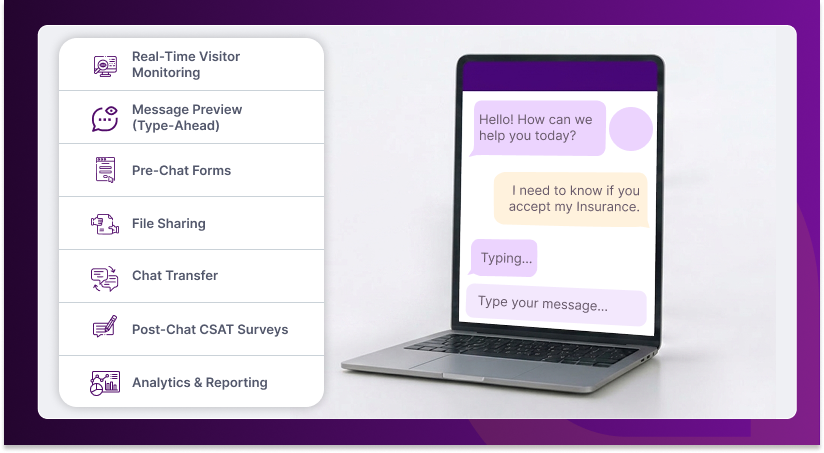
There are many live chat providers available online, but Chattrik is not just one of many. It is Pakistan’s first live chat provider with its very own AI developed by Astrik. Here are some features that allow Chattrik to assist healthcare practitioners in communicating with patients more effectively:
- Live visitor monitoring – observe who visits your website, and on which page they stay for the longest amount of time, so that you can address their interests immediately.
- Message preview (type-ahead) – the chat software sends you a live preview of whatever the client is typing into the chat window. It allows agents to prepare the most appropriate responses more quickly.
- Pre-chat forms – these gather relevant patient data to improve efficiency before the actual conversation begins.
- File and Document Sharing – securely share vital documents such as prescription notes and insurance documents – no need for the additional hassle of an emailed file or scanned document in a paper trail.
- Chat transfer – the context of your conversation with the patient will be sent along with the chat itself to the correct department or agent if the conversation involves specific medical query.
- Post-chat CSAT Surveys – ask patients for their feedback immediately after their conversation ends to measure how effectively you communicated with the patients.
- Analytics and Reporting – detailed statistics provided about your communication can help a practice understand their needs as well as how the quality of the communication they provide to patients is improving.
7. Addressing Common Concerns About Live Chat in Healthcare
Several healthcare providers have expressed reservations about adopting live chat technology despite its overwhelming benefits. Here is an explanation to some of the most common questions asked.
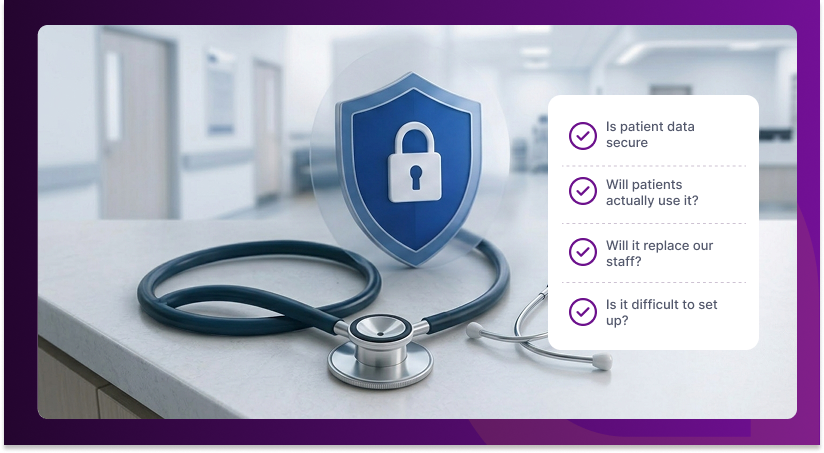
“What about patient privacy and data security?”
The security of your patients’ sensitive health information is indeed paramount and, therefore, should be your top priority. Chattrik is fully equipped with the most sophisticated technology available to prevent breaches in security. All conversations through live chat, just like that of phone calls, is also protected and encrypted so no unwanted persons can access this information. Also, only authorized employees are able to retrieve data from chat conversations which are used in the same ways they would use notes or records left by patients.
“Will patients actually use it?”
They are, particularly among the younger generation, which are very accustomed to online communication. Older patients are less familiar, but many are very impressed with the speed, responsiveness, and efficiency that comes with live chat when dealing with healthcare providers that offer it. Many practices report higher patient interaction.
“Will it replace our human staff?”
No, live chat will support staff to focus on what humans alone can do-assist the most critical cases where human understanding and care are crucial. The most routine queries can be dealt with with less staff, freeing up more time to help people who need it the most.
“Is it difficult to set up and manage?”
The setup of the software, which can be completed very quickly as only a small line of code needs to be added to your existing website, can be executed without any prior technical experience and can be customized to any provider’s needs within just a few hours.
8. How to Implement Live Chat in Your Healthcare Practice
So, how can you get live chat on board for your healthcare practice? Here is a simplified implementation road map.
- Establish your communication goals. What specific communication challenges are you looking to overcome? Call reduction, higher appointment booking rates, better patient satisfaction scores, anything else? Clearly defined goals will be the guide for your implementation strategy.
- Pinpoint the touchpoints where patients interact with your organization most often. Which areas are accessed most frequently by patients visiting your website? The most high-priority places for a live chat widget are often the home, appointment, and service pages.
- Set up your agents and routing rules. Which members of your team will manage live chat messages and how will messages be forwarded to the correct team based on the visitor’s needs? This should all be determined as part of this step.
- Create pre-written answers to frequently asked questions. Nearly all healthcare organizations receive many of the same questions on a regular basis. Prepare an easily accessible library of accurate and empathtic pre-written answers for quick responses.
- Configure your pre-chat form. What patient information do you want to gather from users before a conversation can begin? Build your pre-chat form to capture this data.
- Launch, monitor, and optimize. Get your live chat ready for use, and during the first few weeks, closely observe chat activity. Consider patient satisfaction scores, average response times, and recurring, unanswerable questions in order to consistently optimize.
🚀 Pro tip: Try putting live chat only on the appointment booking page first. That’s where patient intention is strongest and that’s where the most immediate impact of live support will be seen. Optimize the experience there first and then branch out to other parts of your website.
9. The Future of Patient Communication
The move towards using live chat in healthcare is only the beginning of a more significant shift in how medical providers interact with their patients. As technology advances with artificial intelligence, live chat in healthcare will gain far greater functionality.
We are likely to see future live chat services featuring AI that can offer symptom triage-where a patient is encouraged to enter symptoms into the chat window to receive a smart suggestion about the seriousness of their condition and the next course of action. These services will be even more deeply integrated with EHRs so agents will have instant access to relevant patient records and can provide very specific, individual support. Moreover, there will be live chat multilingual capabilities allowing medical facilities to communicate with patients in any language – which would be incredibly useful in markets like Pakistan and the UAE, for example.
The healthcare providers adopting live chat today are investing in a way to communicate that is much more than just answering a current question; it is creating the patient experience of the future. And in a field in which trust, accuracy, and empathy can make life or death difference, it’s more important than ever to perfect communication.
10. Conclusion
Communication is being revolutionized in healthcare. In healthcare organizations that have implemented live chat, patients are expressing greater satisfaction with service, organizations are saving money and reducing appointment no-shows, and patient loyalty has increased. Providers that haven’t adopted live chat may lose patients to competitors that are now offering the kind of responsive and personalized digital patient experience that patients now expect.
Live chat for healthcare providers is not a luxury it’s rapidly becoming an essential expectation. Patients should have their questions answered quickly, appointments easily scheduled, and concerns attended to accurately and with empathy-which a live chat service can help ensure.
Chattrik is designed to assist organizations of all sizes in this communication overhaul. Chattrik’s array of live communication tools, its intelligence, and its advanced analytics have a tendency not only to improve patient communication, but to transform it into a true competitive advantage.
The real question is not if you will adopt live chat, but when?
 Table of Content