
Your sales team spends hours chasing leads that go cold and guessing which prospects are actually ready to talk. Meanwhile, someone is on your pricing page right now, comparing plans, reading your FAQ, and deciding whether to reach out, and your team has no idea this is happening.
This is the gap that visitor monitoring closes. Instead of reacting to form submissions days after a prospect’s real interest has cooled off, your sales team can see what’s happening on your website as it happens, and act while that interest is still fresh and top of mind for the visitor.
In this post, we’ll walk through what visitor monitoring actually does, the core features that make it useful in practice, the real, measurable benefits it brings to sales teams, and a few practical examples of how it plays out in day-to-day selling situations.
What Is Visitor Monitoring?
Visitor monitoring is the practice of tracking who is on your website, what pages they’re viewing, how long they stay on each one, and what actions they take, all in real time, as the visit is happening rather than after the fact. Paired with website visitor tracking tools, it turns anonymous web traffic into visible, actionable data that your sales team can actually use to prioritize their day.
Instead of a lead only existing after they fill out a contact form, visitor monitoring lets you see interest building well before that point: repeat visits over several days, meaningful time spent on key decision-stage pages, and the specific questions a prospect seems to be trying to answer through their browsing behavior.
Without this visibility, sales teams are essentially working blind. They wait for someone to raise their hand through a form, a demo request, or a chat message, and by the time that happens, they’ve already missed the window where the visitor was actively comparing options and forming an opinion about your product.
Features That Power Visitor Monitoring
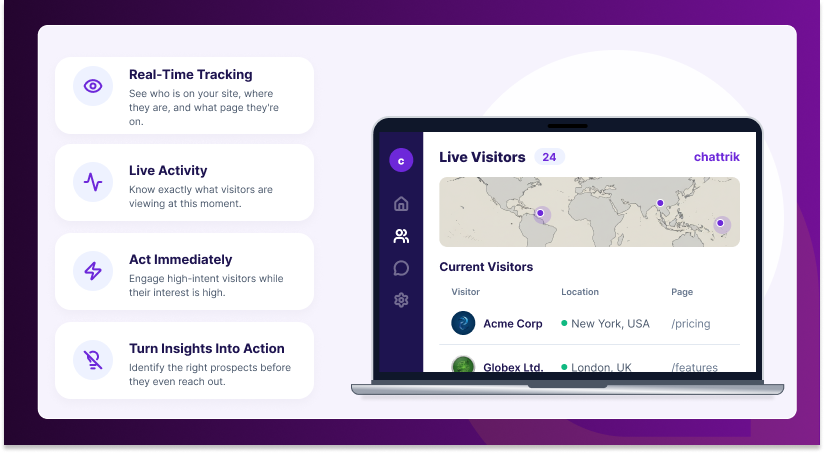
Real-Time Visitor Tracking
At its core, visitor monitoring shows you who’s on your site right now, their approximate location, the device and browser they’re using, and the page they landed on. For sales teams, this means no more waiting for a lead to “surface” through a form days or weeks later. You see the activity as it happens, which opens the door to timely, well-placed outreach.
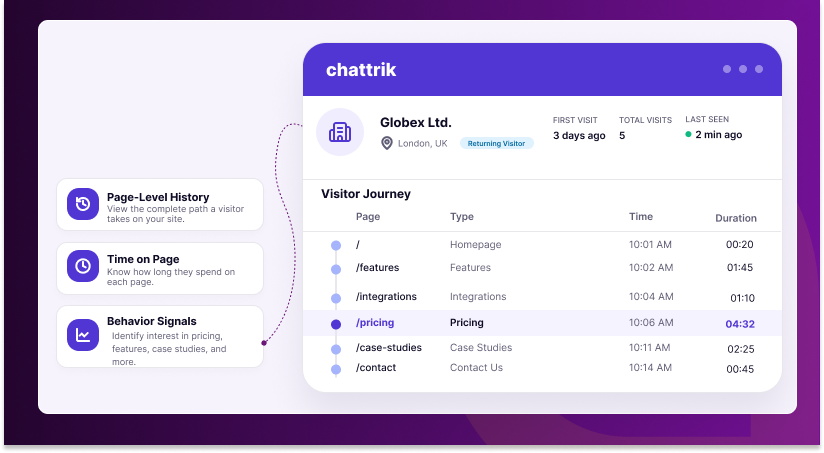
Page-Level Activity History
Good visitor monitoring doesn’t stop at simply knowing someone is on the site. It logs the full path a visitor takes: which pages they viewed, in what order, and how long they spent on each one before moving on. A visitor who lands on your homepage, browses your features page, then spends four minutes on pricing is telling you something very different than someone who bounces off the homepage after five seconds. That difference in behavior is exactly what sales teams need to prioritize their time well.
Visitor Identification and Enrichment
Modern platforms can match anonymous traffic to company names, industries, and sometimes individual contacts using IP data and firmographic enrichment. This turns a vague “visitor from an unknown location” into “someone from a mid-sized logistics company just viewed your enterprise plan twice this week.” That level of detail makes it far easier to decide who’s worth a personal outreach and who can wait.
Returning Visitor Alerts
Visitor monitoring tools can flag when someone who’s visited before comes back to the site. Returning visitors are often further along in their decision-making process than first-time visitors, and a second or third visit within a short window is a strong buying signal that your sales team really shouldn’t miss, especially if it lines up with an open deal or a recent conversation.
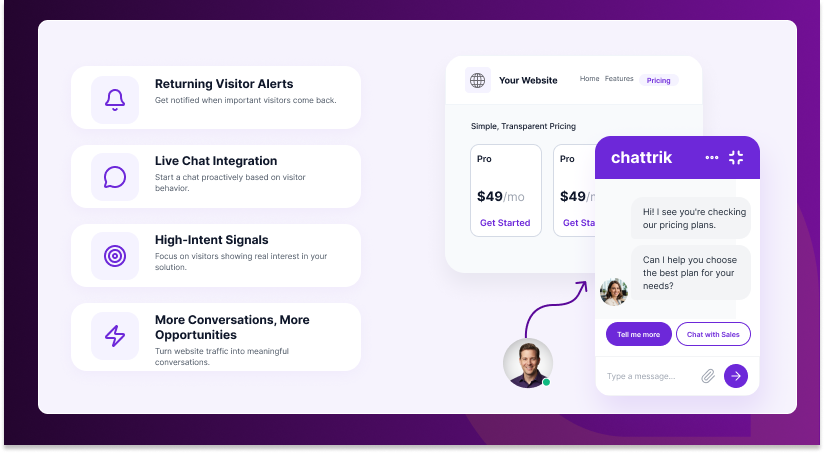
Integration With Live Chat
When visitor monitoring is connected to live chat, your team can proactively start a conversation with a high-intent visitor instead of waiting for them to reach out first. Seeing that someone has been sitting on your pricing page for several minutes is the perfect trigger to open a chat window and offer help before they lose momentum or leave to compare a competitor.
Lead Scoring Based on Behavior
Some platforms let you assign scores to specific behaviors: visiting a pricing page, viewing a demo request page, downloading a resource, or returning multiple times in a week. This gives your sales team a simple, consistent way to prioritize who to contact first, based on actual observed behavior rather than gut feeling or the order leads happened to come in.
Custom Alerts and Notifications
Beyond dashboards, most visitor monitoring platforms let you set up alerts so reps are notified the moment a target account or high-value visitor lands on the site. This means a rep doesn’t have to be watching a dashboard all day. Instead, the system pushes the signal to them directly, through email, Slack, or an in-app notification, right when it matters.
The Benefits for Your Sales Team
Faster, Better-Timed Outreach
The biggest advantage of visitor monitoring is timing. Sales teams no longer have to wait for a form fill or a scheduled follow-up call that might land days after the prospect’s interest has already cooled. They can reach out, or start a chat, while the visitor is actively engaged and the interest is at its peak, which dramatically increases the odds of a meaningful response.
Sharper Lead Prioritization
Not every visitor is ready to buy, and not every lead deserves the same amount of attention right away. With visitor monitoring, reps can see who’s browsed multiple pages, returned more than once, or spent real time on decision-stage content like pricing or case studies, and focus their limited time and energy there first instead of spreading it evenly across every lead in the queue.
More Informed Conversations
Instead of opening a call with generic discovery questions, reps walk in already knowing what a prospect has looked at and, often, what they seem to care about most. A conversation that starts with “I noticed you were comparing our plans” builds trust faster and moves the conversation along more efficiently than a cold, unguided pitch that has to start from zero.
Shorter Sales Cycles
When reps engage at the right moment with the right context, deals tend to move faster from first contact to close. Visitor monitoring removes a lot of the early back-and-forth typically needed to figure out what a prospect cares about, since much of that information is already visible before the first real conversation even starts.
Better Alignment Between Marketing and Sales
Visitor monitoring also gives sales visibility into which marketing pages and campaigns are actually driving engaged, high-intent traffic, not just raw visit numbers. This makes it easier for both teams to agree on what’s working, put more resources behind the content and campaigns that are actually influencing deals, and stop guessing at attribution.
Fewer Missed Opportunities
Without visitor monitoring, high-intent visitors can slip away completely unnoticed, simply because they didn’t happen to fill out a form before leaving. With it, your team can catch and engage these visitors in the moment, before they leave the site and go compare a competitor’s offering instead.
More Efficient Use of Sales Headcount
For smaller sales teams especially, visitor monitoring acts as a force multiplier. Instead of hiring more reps to cover more outbound volume, existing reps can spend their time on the visitors who are already showing intent, which tends to produce a better return per rep hour than blind cold outreach.
Visitor Monitoring in Action: Real Examples
Example 1: Catching a Warm Lead Before They Leave
A visitor from a mid-sized manufacturing company lands on your homepage, browses your features page, then spends over three minutes on your pricing page. Visitor monitoring flags this activity to your sales team in real time. A rep opens a live chat: “Hi, I noticed you were checking out our plans, happy to answer any questions.” The visitor, who was about to leave and think it over on their own, instead gets a demo booked on the spot before they lose momentum.
Example 2: Prioritizing a Returning Visitor
A prospect visited your site two weeks ago, spent a few minutes on your integrations page, and left without converting or leaving any contact details. They come back today and go straight to your pricing page. Visitor monitoring flags them as a returning, high-intent visitor based on that pattern. Instead of sitting in a generic follow-up queue behind dozens of colder leads, they’re bumped to the top of the sales team’s outreach list for that day.
Example 3: Using Behavior to Personalize a Sales Call
A rep is about to call a lead who filled out a demo request form earlier in the week. Before the call, they check the visitor’s activity history and see the lead spent time specifically on the security and compliance page, not the general features page. The rep opens the call by addressing security directly, instead of running through a generic pitch, and the conversation moves straight to the prospect’s actual concerns rather than wasting time on things they already understand.
Example 4: Spotting Account-Level Interest
Visitor monitoring shows that three different visitors from the same company have viewed your site over the past week, one on the features page, one on pricing, and one on the FAQ page. This pattern suggests a buying committee is doing research together rather than a single person browsing casually. Sales can now approach this account as a coordinated opportunity, looping in the right stakeholders early, rather than treating each visit as a separate, unrelated lead.
Example 5: Re-Engaging a Stalled Deal
An open opportunity has gone quiet for two weeks, with no replies to follow-up emails. Visitor monitoring shows that the main contact quietly returned to the pricing page twice in the last few days, without reaching out. This tells the rep the deal isn’t dead, it’s just stalled, and gives them a natural, well-timed reason to follow up again with something more specific than a generic “just checking in” message.
Bringing It All Together
Visitor monitoring turns your website from a passive brochure into an active source of sales intelligence. By combining real-time tracking, page-level activity history, visitor identification, returning visitor alerts, and live chat integration, your sales team gets the context they need to reach out at the right time, with the right message, to the right people, instead of relying on guesswork and generic outreach cadences.
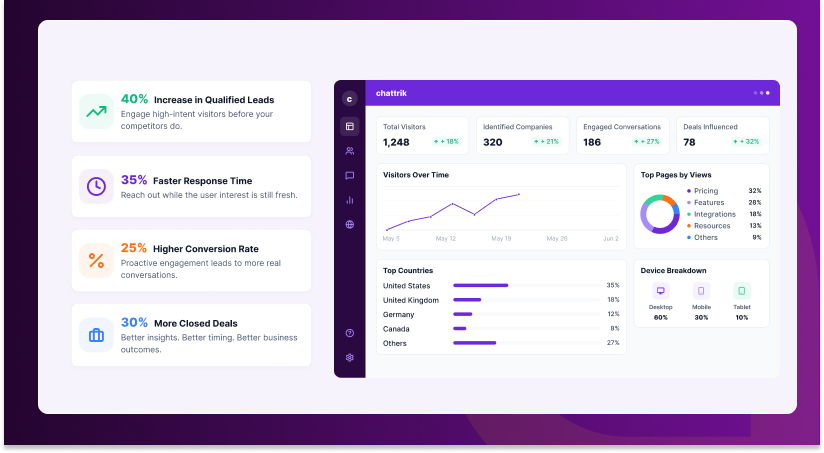
If your team is still relying on form fills and cold outreach alone, you’re likely missing the visitors who are already showing strong buying signals on your site today. Website visitor tracking closes that gap, giving sales the visibility they need to act before the opportunity quietly walks away to a competitor.
 Table of Content