Why Live Chat is the Future of Customer Service in the Middle East

Introduction

In the Middle East, customer expectations are evolving more rapidly than ever before. Consumers, from the UAE and Saudi Arabia to Qatar, Bahrain, Kuwait and Oman, expect speed, convenience and highly personalized digital experiences as a result of the area’s fast-paced digital transformation. From government portals to e-commerce sites, high speed, better accessibility, and effective real-time communications have become indispensable.

In this ever-changing digital environment, live chat has quickly emerged as a game-changing tool and a new supportive tool for better customer service in the Middle East. Companies continue to grapple with rising expectations for instant and reliable support, while live chat provides a culturally appropriate, seamless, and effective communication channel.

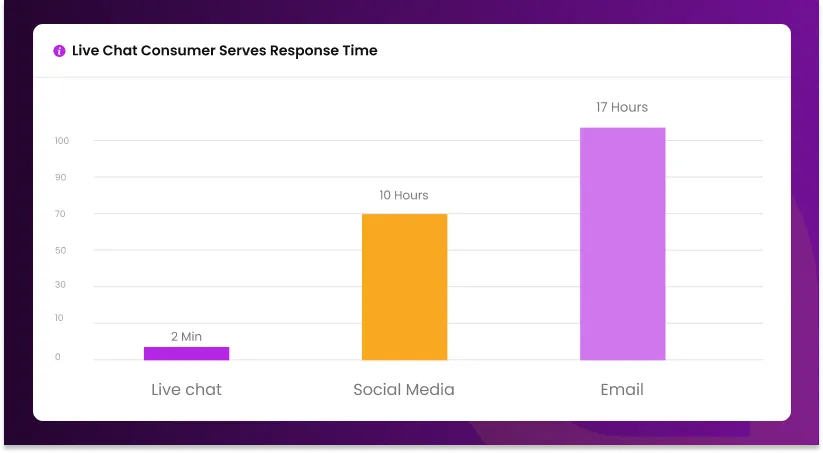
Email responses are perceived to take too long, call centers provide long hold times, and WhatsApp support seems to be in high demand but does not provide any structure or continuity. Live chat solves these issues by providing exactly what today’s Middle Eastern consumers desire.

In this blog, we will discuss why live chat is rapidly becoming the preferred avenue of engagement in the region, highlighting the role live chat plays in enhancing the customer experience, promoting operational effectiveness, and maintaining a competitive edge in an ever-changing Middle Eastern landscape.

As firms in the region are implementing intelligent live chat solutions like Chattrik, it’s becoming evident that the future of customer service is fast, conversational, and personalized. Live chat is not only a conversational tool but also the future of customer engagement in the Middle East.

A Glimpse of Customer Experience in the Middle East

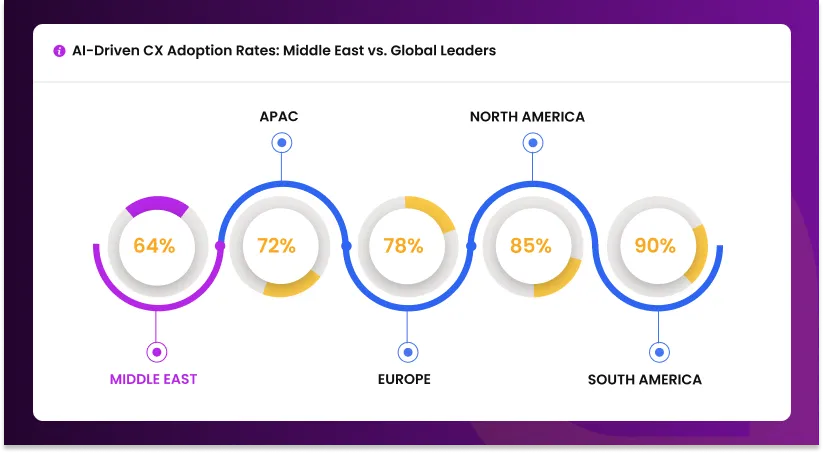
The Middle East—especially the GCC—stands out for its young, super-connected population. People here basically live online. In countries like the UAE and Saudi Arabia, internet access is almost universal, and just about everyone has a smartphone glued to their hand. So, it’s not just that folks are connected; they’re always online, shopping, chatting, and sizing up brands based on every little interaction.

What really shapes what customers want?

A few things come to mind.

First, there’s the mobile-first way of life. Middle Eastern people, like others around the world, have become overly dependent on their mobile phones for all their activities. They handle everything on their phones—shopping, banking, streaming, messaging—you name it. Live chat just fits right in. It’s quick, easy, and works perfectly on mobile. Unlike email or call centers, you don’t have to wait on hold or for someone to reply hours later. You get help right as you’re browsing.

Then, look at how digital services have exploded. There are fintech apps, online stores, healthcare platforms, government sites, travel portals—the list keeps growing. All these need support that can keep up with the tons of users. Live chat delivers that speed and scale.

Culturally, people in the Middle East value fast, respectful, and genuine service. Waiting around for someone to answer? That doesn’t fly. A quick reply goes a long way in building trust.

And honestly, traditional customer service still lags. Lots of brands stick to old-school email or phone support, but today’s digital-savvy customers want something fresher. Live chat fills that gap, offering real conversations in real time.

So, with all this digital maturity, it’s no surprise the Middle East is the perfect place for live chat to thrive.

How Live Chat Is Transforming Customer Service Across the Middle East

Live chat is swiftly becoming the pillar of customer service in the Middle East, ahead of channels often considered to be more traditional, such as email, call centers, and in-store support. As consumers in the UAE, Saudi Arabia, Qatar, Kuwait, Bahrain, and Oman increasingly want instant, mobile-first, and personalized digital exchanges, live chat is considered the best modality to serve the expectations of today’s consumers.

Here are the important reasons live chat is changing customer experience, and growing business in the region:

Timely Engagement for Big Expectations Markets

GCC consumers have grown accustomed to real-time experiences with brands such as Careem, Talabat, and Amazon.ae. Live chat provides immediate engagement without the delays of being on hold or bouncing back and forth in emails, making it the ideal channel for digitally savvy, fast-paced customers.

The Way Modern Middle Eastern Consumers Prefer to Communicate

Chat apps continue to dominate all aspects of daily communication, and live chat is an extension of how people communicate naturally. Millennials and Gen Z, which comprise a large segment of the consumers who shop online in the GCC, tend to prefer shorter, conversational support and dislike taking a formal call or writing lengthy emails.

Surveys consistently rank chat apps and SMS as the most requested channels of brand communications in the GCC, further solidifying the relevance of live chat.

24/7 Availability with AI and Automation

Consumers across the Middle East typically don’t turn on their computers to shop; they often shop late at night, and usually on their mobile device. While AI chat functionality is being utilized, some might be on hand 24/7. The live chat customer service is vital in those circumstances so that consumers never feel disengaged and disconnected from brands. Consumers are now accustomed to immediate engagement they choose to initiate a conversation with the brand.

Whether it’s 11 PM and a Namshi customer has a question, or a Noon customer has a question about delivery for the game they want to order for their child, the live chat support is immediate and accessible.

Multilingual Support in a Multicultural Area

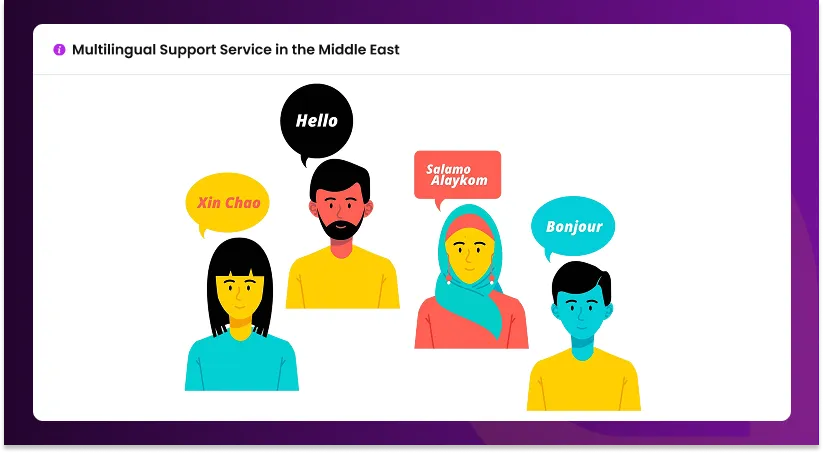
Since the Middle East is primarily a multicultural region, it has become important for brands to support multiple languages to get the job done. It isn’t uncommon for a consumer shopping online in the GCC to have 2-3 languages stacked on top of each other. Live chat enables brands to connect and support this consumer potential by extending the multi-language assistance to consumers, replacing traditional phone calls or lengthy emails. Live chat enables brands to facilitate, in part, the possible demand languages from Spanish, French, Arabic, and more.

AI chatbots can even adapt to different Arabic dialects across:

  • UAE
  • Saudi Arabia
  • Kuwait
  • Qatar
  • Bahrain
  • Oman

This multilingual flexibility gives live chat a clear advantage over other channels.

Customized and Context-Responsive Experiences for Customers

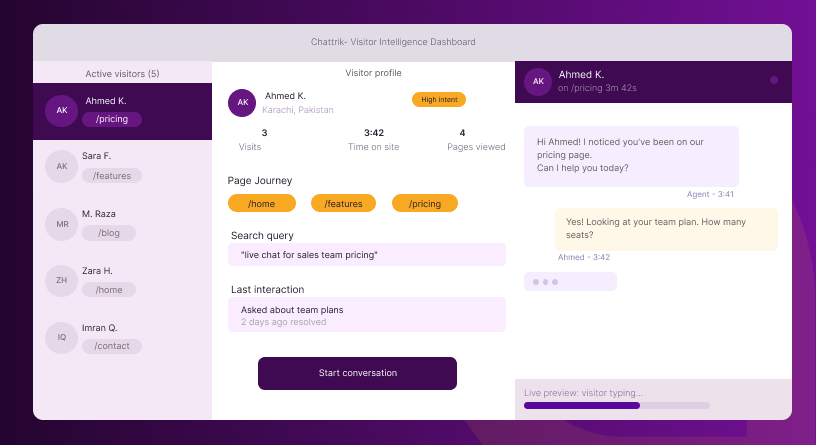
Live chat allows for customized, context-responsive experience for customers by analyzing their browsing behavior, past interactions, and customer profiles to provide tailored responses. For example, Majid Al Futtaim’s e-commerce brands utilize chat assistance to provide customized product recommendations, stock availability updates, and real-time offers based on the browsing path each user has taken. Platforms like Chattrik also enhance this service by allowing agents to view a user’s live session, enabling them to provide exact, relevant, contextual support, resulting in significantly increased customer satisfaction and loyalty.

Significant Cost Savings for Businesses

Live chat provides significant cost savings by enabling a single agent to assist multiple conversations at once. Resultantly, it helps reduce the strength of customer support teams. Furthermore, automated features, such as answering FAQs, ticket generation, and appointment scheduling, reduce operating costs and support increased efficiency. This applies especially to Small and Medium-sized Enterprises (SMEs) in cities such as Dubai, Riyadh, Jeddah, Doha, and Manama, wanting to provide affordable quality support for their customers.

Higher Conversion Rates and Less Cart Abandonment

Live chat leads directly to sales by enabling customers to get instant answers to their questions during the buying process. For example, if a customer does not know when delivery will occur, they can get an immediate answer and complete their purchase. Similarly, if a shopper doesn’t know if a certain item is compatible with a certain product, they can receive quick guidance and then add the item to their shopping cart. Across the Middle East, e-commerce businesses have recorded higher conversion rates and much less cart abandonment when live chat is part of their websites.

Better Customer Experience (CX)

Live chat creates a frictionless customer experience by providing instant replies, precise, easy-to-understand guidance communicated through multiple devices. Customers can ask a question, browse a product, and complete their purchase, all without having to switch applications or wait on hold, ultimately leading to a much more seamless and satisfying customer journey.

Omnichannel Support That Brings Customers Closer

Live chat integrates with WhatsApp, social media, mobile apps, and SMS, which allows businesses to create a continuous, consistent support experience across all channels. This omnichannel support brings customers closer to the brand as it continues their chat in the same way and builds trust in the overall experience with your business.

Real-Time, Reliable, and Reassuring Support

Offering live chat signals openness, accessibility, and brand reliability. Customers feel reassured knowing they can reach support instantly whenever needed—building long-term trust and loyalty.

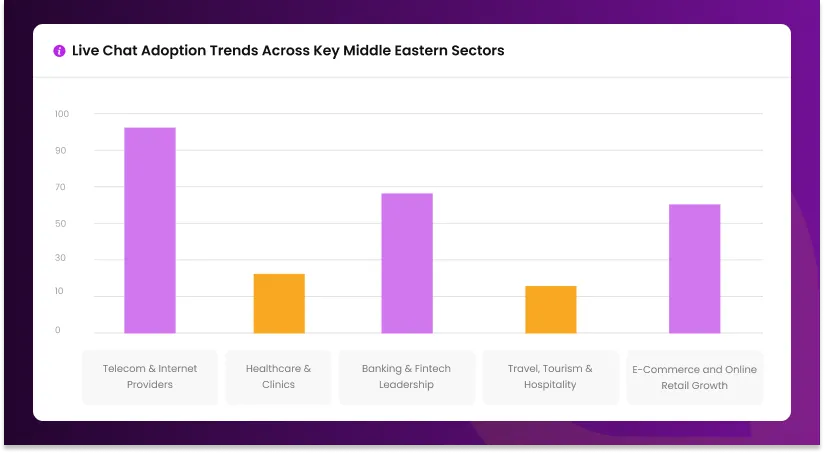
Live Chat Adoption Trends in the Middle East

Fueled by government vision, consumer expectations, and technological innovation, live chat adoption is picking up speed across all sectors. Among the best adoption trends include:

National Initiatives for Digital Transformation

Countries like Saudi Arabia and the United Arab Emirates are giving top-notch digital services top priority through projects including:

  • UAE Digital Administration Policy
  • Saudi Vision 2030
  • Qatar Smart Program (TASMU)

These systems urge public and private organizations to upgrade their communication systems including live chat. Many government sites already offer live chat help. For instance, Dubai’s Smart Government portal gives real-time chat to help citizens navigate things like visa applications, licencing, and payments.

E-Commerce and Online Retail Growth

Platforms like Amazon.ae, Noon, Carrefour Online, and Namshi have popularized fast digital customer service. Live chat supports their high volumes of returns, delivery updates, and product inquiries.

With more Middle Eastern consumers shopping online, businesses of all sizes—from boutique stores to enterprise retailers—need chat-based support to stay competitive.

Banking & Fintech Leadership

Banks like Emirates NBD, Qatar National Bank, Al Rajhi Bank, and Abu Dhabi Islamic Bank have integrated chat support for account inquiries, card activations, loan assistance, and more.

Fintech apps such as stc pay, Tabby, and Tamara use live chat and AI chatbots to provide instant financial support.

Travel, Tourism & Hospitality

Airlines like Emirates, Qatar Airways, Etihad Airways, and major hotel chains now rely on live chat to handle booking issues, flight changes, check-in support, and customer queries.

The tourism-heavy economies of Dubai, Doha, and Riyadh increasingly prefer multilingual chat support for visitors.

SMEs Embracing Live Chat to Compete

Small and medium-sized businesses—especially online stores—are rapidly adopting live chat through platforms like Chattrik to provide customer service without the need for large call centers.

The Role of AI and Automation in Enhancing Live Chat in the Middle East

The Middle East is a center for customer support that utilizes AI. Businesses have to deliver a fast-accurate-multilingual service, so businesses rely on advanced technologies of AI to strengthen their live chat.

AI-enabled chatbots, in particular those that are based on platforms like Chattrik, manage basic service questions such as order tracking, delivery confirmation, verifying ownership of accounts, resetting passwords, and frequently asked questions. This alleviates the burden of service teams and gives the option for customer service 24/7 if needed. For instance, major telecom companies like du (UAE) and STC (Saudi Arabia) have automated chat systems to help customers diversify their experiences, especially during peak demand for questions regarding bills, data packages, and troubleshooting.

Smart routing, which is in addition to everything already mentioned, is when the chatbot can recognize what type of question the customer has and route the conversation to a human agent. This is more favorable for the customer because they do not need to wait in a long line, knowing they have an agent who can help them. AI can also assess the sentiment of the customer i.e. frustration or urgency–and escalate the conversation if needed.

In addition, predictive AI offers organizations the ability to identify customer needs. If the user is tracking a delivery six times, for example, the system may automatically initiate a chat to provide updated time-of-delivery estimates. Using a proactive approach to customer care can dramatically improve customer satisfaction, and it aligns with the kind of service experience consumers in the Middle East expect in this day and age. The combination of live chat plus AI is not replacing an organization’s human agent workforce; it is making them more productive. With AI performing repetitive tasks, human agents are now responsible for complicated customer issues that require empathy and judgment. This hybrid approach to customer service is rapidly becoming the new standard for excellent customer service in the Middle East.

Industries Leading Live Chat Adoption in the Middle East

E-Commerce & Retail

The growth of e-commerce in the Middle East has experienced tremendous growth, with the UAE and Saudi Arabia emerging as the leaders in regional spending. Established firms like Amazon.ae, Noon, Carrefour, and Namshi have developed dynamic chat-based ways to service consumer questions related to anything related to returns or delivery, as well as product-based questions.

Conversely, smaller online retailers also experience the benefits of live interaction, specifically with building trust – something less necessary in markets where consumers are apprehensive about purchasing from unfamiliar brands. Receiving on-the-spot answers during the checkout process will boost conversion and decrease cart abandonment.

Banking & Fintech

Banks and financial institutions throughout the region are integrating live engagement technology to replace long wait times associated with call center queues. With banks like Emirates NBD, Al Rajhi Bank, Qatar National Bank, Bank Muscat et al., it is now common practice to service and assist customers regarding card issues, accounts problems, or loan requests in real-time engagements online.

Similarly, fintech apps Tabby, Tamara, stc pay have implemented live engagement technology to manage high support activity and volume seamlessly. Live engagement technology combined with secure authentication allow for quick communication with customers in a safe manner without compromising on security.

Travel, Tourism, & Hospitality

The tourism sector is highly dependent on instant connections and live chat is a necessity for airlines, hotel chains, and travel sites. Emirates, Qatar Airways, Etihad Airways, and large hotels are showcasing chat-based support for ticket change requests, booking confirmations and customer care.

Increasingly, tourists like chat support because they want to avoid expensive international calls and chat support can be Mandarin, Arabic, English, or even French or Urdu support for visiting groups of guests.

Healthcare & Clinics

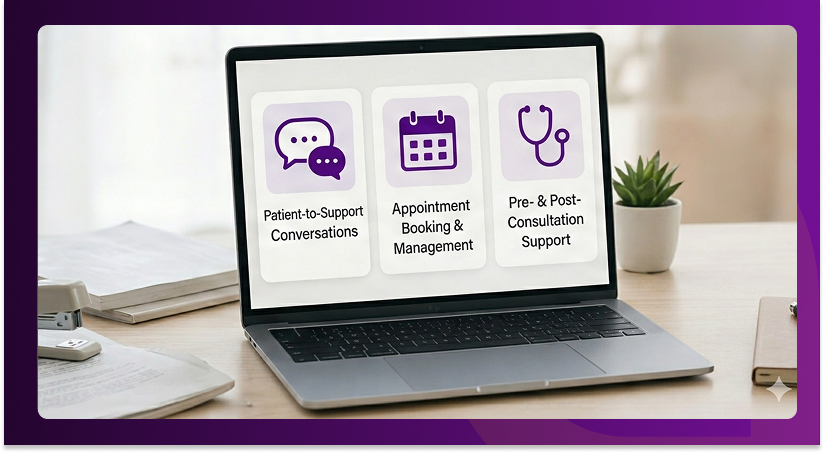
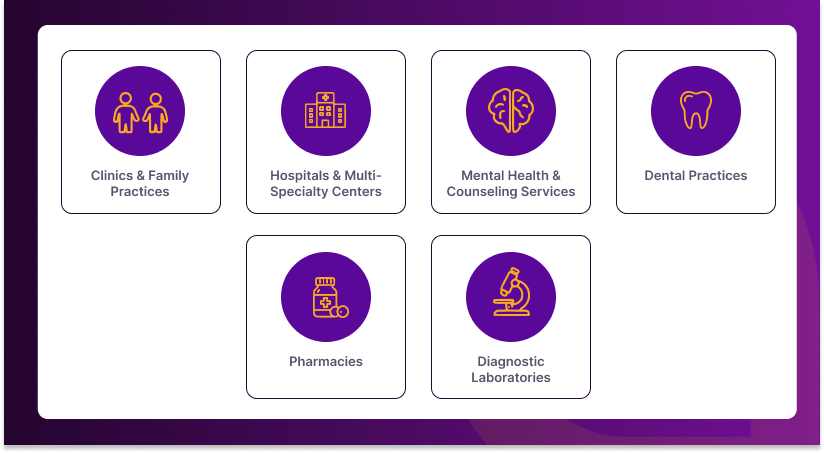
Clinics and hospitals are now using live chats for appointment requests and management, pre-consultation help, insurance queries, and general questions. While chat cannot medically diagnose, a live chat offered as administrative support improves a patient’s experience significantly.

Telehealth platforms and digital pharmacy services in the UAE and KSA are also using chatbots to walk patients through registration support, prescription refills, and follow-ups.

Telecom & Internet Providers

Telecom companies in the MENA region receive extremely high volumes of inquiries. Live chat is fast and low-cost to help customers with issues compared to a traditional call center. Many of the telecom providers in the region, like Etisalat, STC, Ooredoo, and Batelco rely on artificial intelligence to chat and help customers resolve their issues, like trouble with SIM cards and payment issues.

Cultural Factors Supporting Live Chat Growth

Digital transformation is a main factor driving the use of live chat conversations in the region, but cultural factors are nearly as impactful.

The Faster and More Respectful Communication Preference

Middle Eastern consumers care deeply about hospitality and speed, but live chat gives consumers polite, instant answers as consumers expect good service.

Privacy Matters

Many customers prefer live chat over a phone conversation for privacy reasons, efficacy for sensitive issues, such as financial or account-based issues. Live chat gives a veil over communication for privacy the consumer may prefer with a brand.

Shopping at Night

In many regions, particularly in the context of peak-time, consumers use their online sources during the day or afternoons, consumers shop at night. In the Middle East, consumers tend to browse and shop late at night. Using live chat, particularly AI live chat, guarantees that brands are visibly present and available late into traditional business hours.

The Middle East is a melting pot of residents and tourists who speak many different languages. Great brands should offer live chat options that can speak Arabic, English, Hindi, Urdu, etc., for customer service options.

Trust happens through sounding human

Consumers welcome the idea of automation as it pertains to engaging with a service, but there is still a welcome for the human touch that customers prefer. Live chat creates a scenario where automated response is instant and easy, with the option to be transferred to a living human customer service representative.

Challenges Slowing Adoption — Solutions

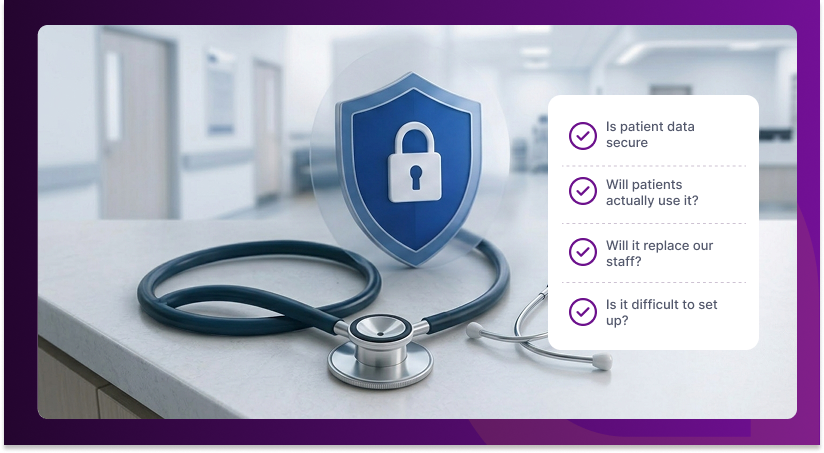
Regardless of the clearly defined benefits of live chat, some businesses in the Middle East still hesitate to adopt live chat due to similar misconceptions. The most common is that live chat is expensive and only for big companies—if you’re a small to medium-sized business with an online presence or a smaller company seeking to grow your business, live chat is an easy and affordable option, and companies like Chattrik have solutions for you. Another assumption is that you don’t have enough people to chat with customers, and that’s the case when inquiring through chat; AI handles a large part of customer inquiries, so many companies don’t need large teams to engage in live chat.

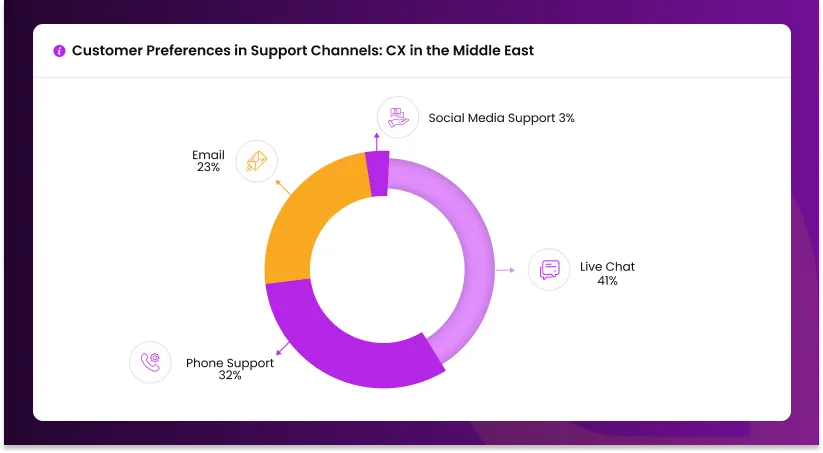
Many companies assume that customers still prefer phones, but the data does not support that assumption—young consumers in the Middle East, in particular, prefer chat-based support, and the mobile world has changed how consumers prefer to engage with businesses. Others think Arabic support will be an issue; however, modern live chat systems are built to support Arabic scripts, dialects, and RTL interfaces. Lastly, there is a misconception that automation does not seem like it is there to help. With proper customization, tone, and conversational design, AI chatbots can feel like they are engaging with humans, and they are engaging with clients with empathy and can even move live agents into the conversation—provided organizations engage with live agents when conversations become human.

Why Chattrik Is the Ideal Live Chat Solution for Middle Eastern Businesses

Chattrik is designed for businesses based in the Middle East, providing an AI-assisted chat solution to simplify customer interaction while enhancing service. Both integration and setup are quick and straightforward, allowing businesses to integrate live chat setup in minutes and without any technical complexity. The AI chatbots automatically reply, create tickets, and route inquiries, allowing for 24/7 support while diminishing agent workload.

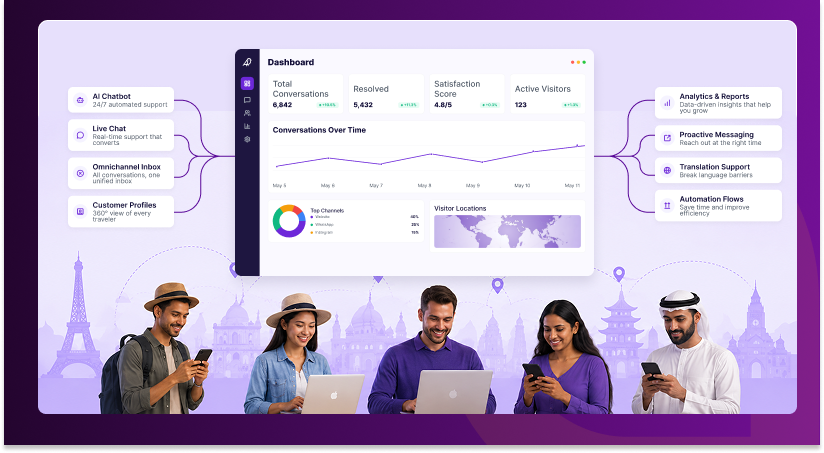
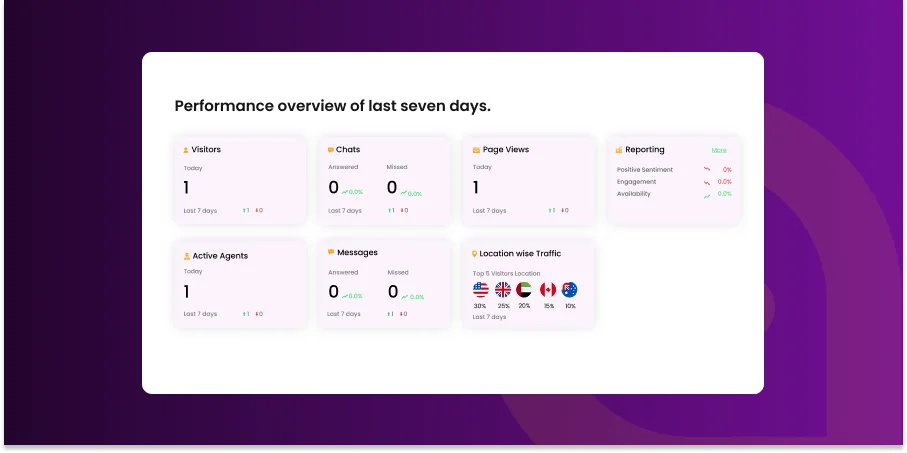
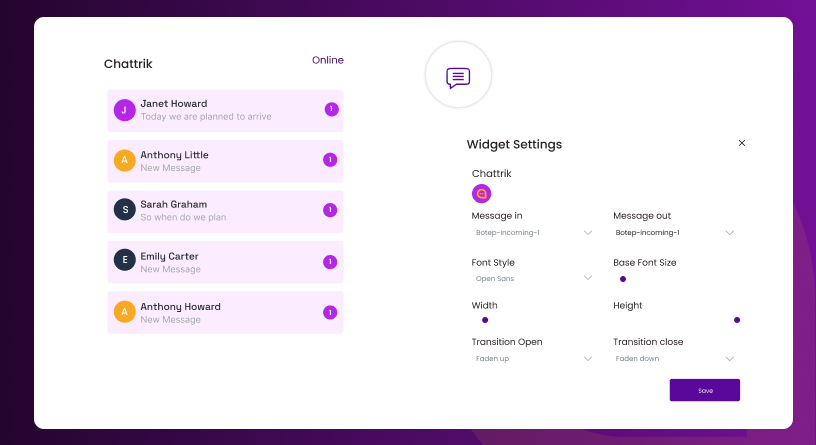
It allows startups and SMEs in the Middle East to be accessible with the features of live chat. It also includes built-in analytics, which provide key insights and detailed reporting into the customers’ actions, prior interactions, response times, and agent performance. It also helps businesses improve their support strategy. Chat interfaces can all be completely customized, allowing businesses the ability to change colors, greetings, automate messages, and even customize chatbot personalities. Finally, it integrates seamlessly with other platforms, including CRM’s, WhatsApp Business, email, and e-commerce platforms to maintain smooth operations across all customer touchpoints.

The Future of Live Chat in the Middle East

As the Middle East continues its rapid digital transformation, live chat is set to become even more advanced, shaping the future of customer communication across all major industries.

One significant development will be the rise of fully AI-driven customer journeys, where artificial intelligence guides users from initial inquiry to purchase and even after-sales support without human intervention. Another major trend will be predictive customer service—systems capable of identifying needs before customers express them and initiating proactive chat assistance to prevent issues or enhance satisfaction.

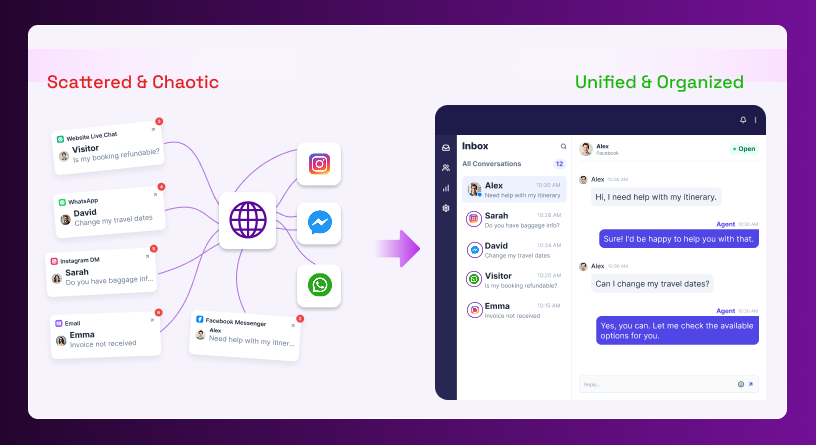
The region will also see a stronger push toward omnichannel support, where live chat seamlessly merges with WhatsApp, Instagram DM, Facebook Messenger, and email into a single unified dashboard for smoother operations. Alongside this, businesses will leverage hyper-personalization, using customer data to deliver deeply tailored interactions based on individual behaviors, preferences, and service history. As GCC countries strengthen their digital privacy and data protection regulations, secure and compliant chat platforms like will become even more essential for businesses.

Finally, traditional call centers are expected to evolve into digital-first customer service hubs, powered by AI automation and advanced live chat systems, reducing reliance on phone-based support and significantly improving efficiency across sectors.

Conclusion

The Middle East is one of the fastest-growing digital economies globally, with customers in the region requesting smarter, faster, and personalized service experiences. Live chat checks all of those boxes and beyond. The ability to communicate in real-time, have multi-lingual support, automation, and cultural alignment, making it the ideal mode of communicating for businesses in the region.

If you are an e-commerce company in Dubai, bank in Riyadh, hospital in Doha, or start-up in Bahrain, live chat is no longer optional, but an imperative to build trust and engender customer loyalty.

Live Chat Companies have begun paving the way by providing simple, intelligent, scalable, fully Arabic-supported live chat solutions customized for Middle Eastern businesses.

Is your business ready to deliver faster, smarter, and personalized support across the Middle East? Leverage Chattrik’s intelligent live chat solutions to build trust, loyalty, and lasting customer relationships.

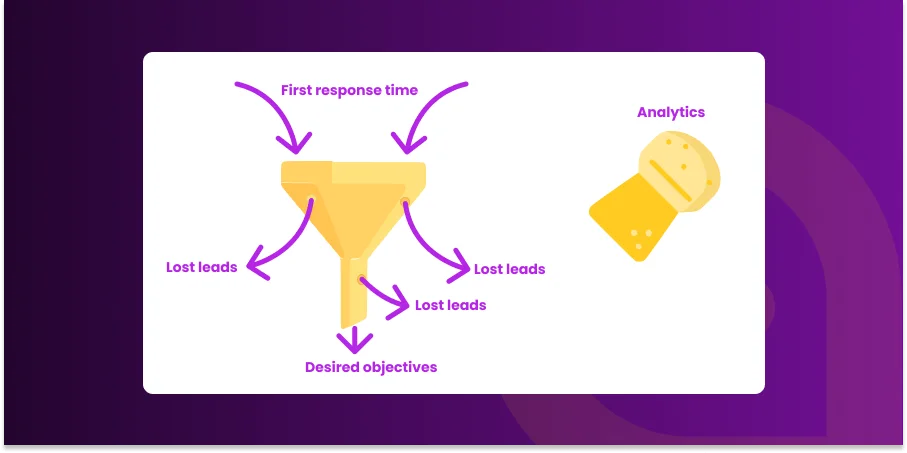
The Hidden Revenue Leak: Lost Leads That Never Reach Your Sales Team

Introduction

A customer visits your site, searches for some products in the cart, and then disappears. No response. Just another mark added in bounce rate statistics.
The e-commerce market has a common trend of customer disappearance. Baymard Institute published a study last year in 2024 that the average online shopping cart abandonment rate is 69.57%. It means that 7 out of 10 customers leave the cart without shopping.
So, the question arises why customers are not interested in shopping online. And what strategy will you apply to develop interest in customers for online shopping?
Let’s explore the main reasons for low e-commerce sales, along with robust solutions to reduce bounce rate, upgrade customer journeys, and refine website conversations.

Struggling with missed sales opportunities? Discover how Chattrik helps capture every lead in real-time.

Why Customers Don’t Buy Online: Key Reasons for High Bounce Rates

A lead is st in a company’s product or service. Leads refer to customers’ action to buy something from a company after the successful communication and relationship between customers and seller through platforms.

Sometimes, a customer does not buy anything from a seller even after the sellers’ all-out effort. This scenario refers to lost leads.
It is not necessary that every slipped lead is unqualified. There are many cases where customers who shoe genuine interest never make it to the sales agent.

  • Lost Leads are opportunities who could have been converted but are missed due to poor performance, ineffective processes, and problematic tracking system.
  • Unqualified leads, however, are those who were never  a good option to start with.

This distinction is important to understand because lost leads mean lost revenue opportunities, while unqualified leads are a part of filtering process.


Why Do Leads Get Lost?

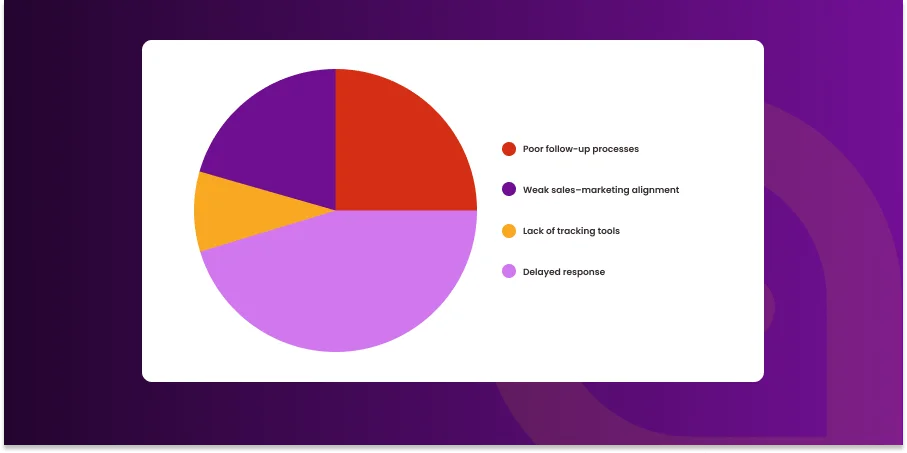
Businesses lose leads for various reasons. Let’s explore the main causes:

Delayed response:

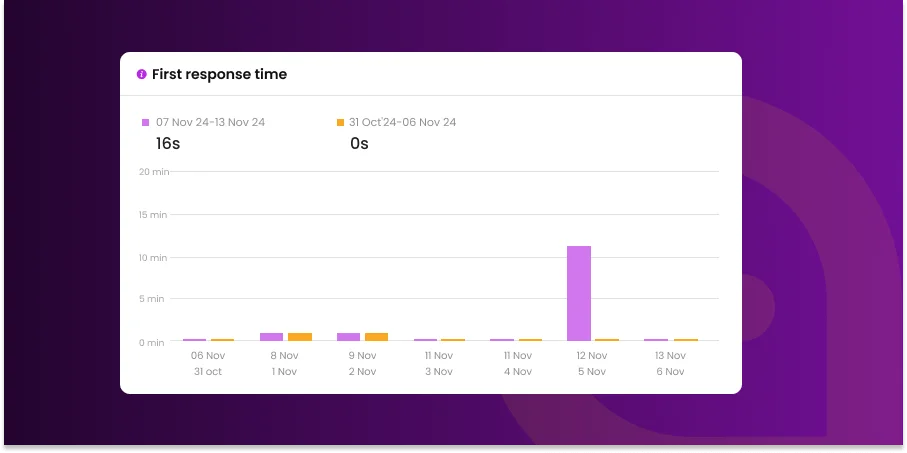
Every customer expects a quick response from a seller. Every extra minute you delay gives your competitors a better chance to step in. In fact, every 10-minute delay can reduce your conversion chances by up to 400% , according to research “The Best Practices for Lead Response Management” published in Harvard Business Review. It makes them 21 times more likely to convert compared to waiting 30 minutes.

Poor follow-up processes: Leads are lost when there are no effective and consistent follow-ups.

Weak sales–marketing alignment: Leads don’t reach the target in the absence of proper alignment between sales and marketing.

Lack of tracking tools: In the age of technology, if businesses lack tracking tools, there will be no leads at all.

Human error: Forgetting to return calls, misplacing contact info, or neglecting leads altogether.

Each of these reasons contributes to missed sales opportunities that silently erode revenue.

The Real Cost of Lost Leads

The financial impact of lost leads goes beyond immediate missed sales.

Direct Revenue Loss

A missed lead means a missed sale. In industries where a single lost lead costs £400–£500, losing just hundreds of leads can lead to revenue loss of £45,000–£50,000. Multiply this figure across the year, and you get the staggering patterns.

Declining Marketing ROI

Businesses invest heavily in ads, SEO, and campaigns to generate leads. When follow-ups fail, that spend is wasted. Every dropped lead directly reduces the return on marketing investment.

Extended Sales Cycles

Delayed responses cause leads to lose interest or move to competitors. This doesn’t just cut conversion rates — it lengthens sales cycles, increasing acquisition costs and lowering sales team efficiency.

Erosion of Brand Value

Customers expect quick, consistent engagement. Poor response times create frustration, reduce trust, and silently damage brand reputation. Over time, this compounds into both lost sales and higher acquisition costs.

For example: If a business spends $10,000 a month on marketing and loses 30% of leads to poor follow-up, that’s $3,000 wasted every single month.

How to Identify Sales Funnel Leaks

With the help of effective analytics and sales team lead and management, you can identify the exact leaks-whether it is during initial capture ,handoff, or follow-up.

Track Funnel Drop-Offs with Google Analytics

Set up “Goals” and enable “Funnel Tracking” in GA to visualize where prospects leave your funnel.

Use Targeted Landing Pages

Create focused landing pages that solve one problem and guide prospects toward one clear action (e.g., signup, purchase).

Blog Regularly for Traffic & Leads

Publish valuable, search-optimized content to attract prospects genuinely interested in your solution.

Strengthen Calls-to-Action (CTAs) Across Channels

Ensure every webpage, blog, and newsletter includes a clear CTA (e.g., forms, signups) and use anchor text for natural placement.

Engage via Social Media & Valuable Content

Stay active on social platforms, share insights, freebies, and how-to guides to build trust, increase traffic, and reduce funnel drop-offs.

Lead Tracking Strategies For Better Sales Management

To stop revenue leaks, you need airtight lead tracking strategies. Here are proven methods:

CRM Integration Across Platforms

Centralize customer data by integrating all platforms (website, social, ads, and support) into a unified CRM to track every interaction seamlessly.

Lead Scoring & Prioritization

Assign scores to leads based on engagement, demographics, and buying intent so sales teams focus on the highest-value opportunities first.

Multi-Channel Tracking

Monitor leads from email, calls, social media, and chatbots in one dashboard to avoid losing prospects across touchpoints.

Automated Follow-Ups & Reminders

Use automated workflows to ensure timely responses, reducing the risk of forgotten or delayed follow-ups.

Sales-Marketing Alignment

To establish a consistent and effective response, aligning sales and marketing is very important. There must be clear rules and real-time notifications between these two to prevent leads from being wasted.

Analytics & Performance Monitoring

Leverage data dashboards to measure conversion rates, drop-offs, and campaign effectiveness, enabling continuous optimization of the pipeline.

With tools like Chattrik, you can track every conversation and ensure that no lead goes unnoticed.

How to Capture More Leads and Prevent Revenue Loss


Add Conversion-Friendly Touchpoints / Chat Pop-Ups and Proactive Messaging

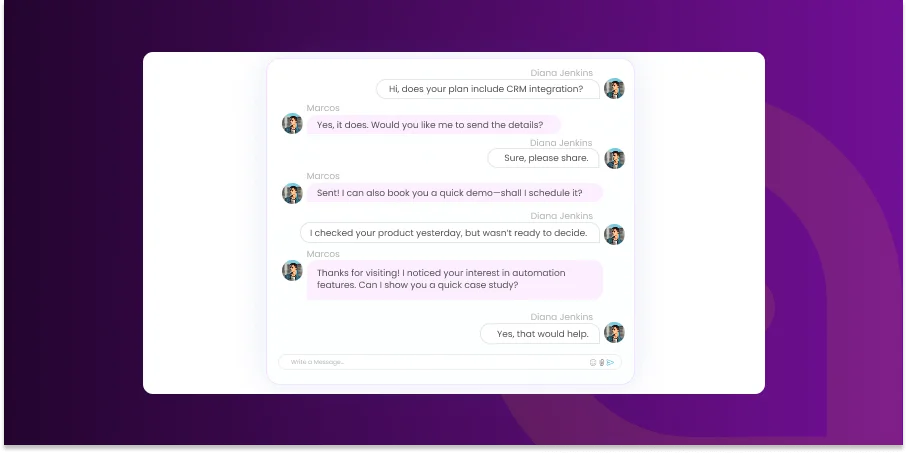
According to research by Harvard Business Review, businesses are 21 times more likely to qualify leads after reaching out in the first 5 minutes than a business that waits 30 minutes or longer. Tools in the market such as Chattrik allow prompts through ads based on browsing behaviors (e.g., “Need help choosing a plan?”), which can guide guests toward desired actions instead of hitting the exit button and having high exit rates.

Immediate Response / The “5-Minute Rule” in Lead Capture

According to research by a Drift Report (2022), 44% of companies take more than 24 hours to respond to a lead inquiry, even though customer expectations are under 5 minutes. Companies like Zendesk and Intercom, who use automated chatbots for engagement, keep consumers active before handing them off to a live agent. Instantly engaging the customer makes it much harder for them to bail out and decreases dropout rates.

Personalize Outreach Using Data and Segmentation / Moving Beyond Generic Responses

As noted in Salesforce’s State of the Connected Customer Report (2023), even with proper privacy protections, 73% of customers expect personalized conversations about their previous experiences. For example, Spotify uses segmentation and behavior-based data to create curated playlists and recommendations, illustrating how personalization fosters loyalty

Take Advantage of Live Chat Functionality for Smarter Engagement

  • Real-time typing view
    • Features such as Chattrik’s typing preview enable agents to prepare for customer’s requirements and formulate faster responses, positively influencing the overall experience for users.
    • This can improve average handling time (AHT) and allows for prospective leads to stay engaged.

  • Smart chat routing
    • Forrester Research estimates poor routing costs businesses $2 billion per year in lost productivity.
    • Chattrik’s routing feature ensures leads are routed in real time to the appropriate department – sales vs. support vs. billing, without any delay.
  • CRM Sync for Easy Visibility
    • A McKinsey report stated that, companies that operate integrated customer relationship management (CRM) software saw an increase of 15 – 20% in lead conversion rates.
    • One of the largest examples is using live chat integrated with a customer’s CRM to provide hosts and guests with personalized support that ensures no queries fall through the cracks, like Airbnb.

Balance Automation With Human Interaction

  • Chatbots for the Initial Capture
    • Chatbots provide instant responses to Frequently Asked Questions and can even schedule demos. According to IBM, chatbot use saves companies $8 billion a year in customer service costs.
    • For example, Bank of America’s Erica bot has completed and handled over 100 million different customer needs, so customers do not have to wait for answers to their questions before they take action.
  • Human Handoff for Complex Needs
    • Once a lead is engaged, handing them off to a capable salesperson instills trust in the lead to take the next steps with a real person. This human connection is critical to closing business opportunities, particularly with B2B deals.

Lower Lead Leakage Using Tracking Tools / Avoiding Missed Opportunities

A Gartner Report showed that companies without sufficient lead-tracking lose up to 30% of their opportunities each year. With the use of Chattrik (and other CRM-integrated chat options), every conversation is tracked and logged, follow-ups can be automated, and no lead will “fall through the cracks.”

Continuous Optimization Through Analytics / Measure What Works

Analyzing response times, conversation drop-offs, and conversion rates helps businesses refine their lead strategy. For example, Shopify continuously A/B tests chat prompts and messaging formats, which has helped them maximize customer acquisition from their website.

Don’t let another lead slip away. See how Chattrik helps businesses capture and convert every opportunity.

Case Example: Before and After Fixing Funnel Leaks

Consider an e-commerce company generating 1,000 monthly leads:

  • Before lead tracking
    30% of leads were lost due to poor follow-up → 700 leads reached sales, conversion rate 10% = 70 customers.
  • After implementing Chattrik:
    95% of leads captured, conversion rate rises to 12% = 114 customers.

That’s a 63% increase in revenue from the same marketing budget.

Action Plan: Fixing the Revenue Leak in 5 Steps

Equally important in 2025 is enhancing the overall employee experience. In a competitive job market, how employees perceive their journey within a company—from recruitment to exit—can significantly impact retention and reputation. A poor onboarding process, for instance, can leave new hires disengaged from day one. Conversely, a smooth and welcoming experience can create lasting loyalty. HR professionals must take a design-thinking approach to the employee lifecycle, mapping out each touchpoint and identifying areas for improvement. Technology plays a vital role in creating frictionless experiences. Tools that automate routine HR tasks, facilitate real-time feedback, and provide easy access to resources empower employees and reduce frustration. When employees feel seen, heard, and supported, their productivity and satisfaction naturally rise.

Audit Your Funnel to Find Leak Points

Before fixing revenue leaks, you need to identify where they occur. Mapping the customer journey helps businesses track how leads move from awareness to conversion, making it easier to identify friction along the way. By spotting drop-offs, whether during form fills, chat conversations, or after demos, companies can address points where leads go silent. Research from HubSpot (2024) highlights the importance of this visibility, revealing that 61% of marketers struggle with lead conversion tracking, which means leaks often go unnoticed until revenue begins to dip.

Improve Response Times Using Live Chat

Speed is non-negotiable in today’s digital marketplace. The “5-minute rule,” highlighted by Harvard Business Review, shows that responding to a lead within five minutes makes businesses 21 times more likely to qualify them compared to waiting 30 minutes. Tools like Chattrik give companies an edge by reducing delays through instant connections, ensuring prospects don’t bounce to competitors. For example, Intercom reports that 82% of customers are more likely to buy when they receive immediate answers via live chat.

Automate Lead Capture with Tools Like Chattrik

Manual processes often lead to missed opportunities. Smart automation features such as automated follow-ups, CRM sync, and proactive chatbots ensure that no lead slips through the cracks. The cost of neglecting this can be significant—Gartner estimates that businesses lose $1 million annually for every 100,000 leads mishandled due to lack of automation. On the other hand, Salesforce reports that companies using automated lead management see a 10–15% revenue uplift within just 6–9 months, proving the strong ROI of adopting automation.

Align Sales and Marketing for Smooth Handoff

Leads must seamlessly move between teams to prevent losses. Shared visibility through CRMs integrated with live chat ensures that marketing-qualified leads (MQLs) instantly become sales-ready leads (SQLs), eliminating delays in the handoff process. According to a Forrester report, companies with strong sales–marketing alignment achieve 27% faster profit growth, proving the value of seamless collaboration. A practical way to achieve this is by using tools like Chattrik’s smart routing, which directs leads to the right sales representative in real time.

Continuously Track Performance Through Dashboards and Reports

Revenue leak prevention is not a one-time fix—it requires constant monitoring. Real-time dashboards provide powerful analytics that highlight conversion bottlenecks, average response times, and missed opportunities, allowing businesses to quickly identify and address weak points. McKinsey reports that companies leveraging data-driven tracking are 23 times more likely to acquire customers and 19 times more likely to achieve profitability. By conducting regular reviews, teams can iteratively improve scripts, workflows, and engagement strategies, ensuring continuous optimization of the customer journey.

Conclusion

Lost leads are more than just a small issue; they are a hidden revenue leak for business that can hold up growth, squander marketing dollars, and annoy potential paying customers.

The good news? Leaking revenue like this can be eliminated with better sales team lead management, real-time chat engagement capabilities, and smart tracking tools to help you turn these leaks into new revenue streams.

If you are looking for a way forward to enhance your sales leads and get your potential customers stuck with your website, use Chattrik. Stop missing opportunities. Start capturing all leads with Chattrik’s smart live chat solution.

Want a Free Demo?

Chattrik vs Tawk.to: Which Live Chat Tool Wins for Sales & Growth?

If you’ve ever watched a potential customer linger on your pricing page for three minutes and then disappear without saying a word, you already understand why live chat software exists. The right platform doesn’t just let you talk to visitors — it turns your website into an active sales floor where conversations become conversions, and support becomes a growth engine.

Two names that keep coming up for businesses making this decision are Tawk.to and Chattrik. On the surface, they’re both live chat platforms with widgets, dashboards, and agent tools. But dig a little deeper, and the differences become significant — especially if your goals include scaling sales, automating engagement, and growing a business in competitive markets like Pakistan or South Asia.

This blog breaks down both platforms across every dimension that matters: features, pricing, automation, analytics, sales tools, team management, and who each one is actually built for. By the end, you’ll know exactly which one belongs on your website.

Introduction

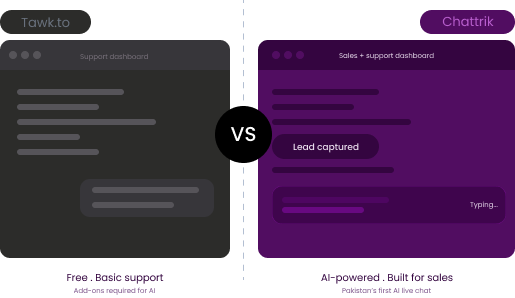
Tawk.to launched over a decade ago and has grown into arguably the most widely used live chat tool in the world. According to BuiltWith data, it’s active on over 550,000 live websites globally, and it holds more than 20% of the live chat market share. The secret to its growth is simple: the core platform is completely free, forever. No seat limits. No chat limits. No websites limit. It’s a remarkable offer that has made it the default starting point for millions of small businesses and startups.

Chattrik, on the other hand, is younger, fresher, and carries a different kind of significance. Developed by Astrik, a Pakistani digital company, Chattrik is Pakistan’s first locally built, AI-enabled live chat software. It was launched in early 2026 with a clear mission: to give Pakistani and regional businesses a powerful, intelligent chat solution that’s built with their context in mind — not just adapted from a Western product. Chattrik’s founders have described it as not just a chat tool, but a “growth engine” designed to build trust, deliver instant support, and convert visitors into long-term customers.

So the question isn’t really “which one is free?” It’s: which one will actually help your business grow?

Round 1: Core Live Chat Features

Both platforms deliver on the fundamentals — real-time chat, visitor monitoring, offline messaging, and chat transcripts. But the experience, depth, and polish differ considerably.

Tawk.to

Tawk.to’s free feature set is genuinely impressive. You get a customizable chat widget, canned responses, visitor tracking, file sharing, multi-language support, a built-in ticketing system, and a knowledge base — all without paying a cent. The platform works across browsers and mobile apps, and supports multiple agents handling simultaneous conversations. Chat history is fully accessible, and real-time visitor monitoring lets you see who’s on your site, which pages they’re browsing, and how long they’ve been there.

One feature users consistently praise is the ability to proactively reach out to visitors, though this is more of a manual process in Tawk.to. Canned responses speed up repetitive interactions, and agents can handle multiple chats in parallel. The mobile app, while functional, has drawn some criticism for occasional lag and unexpected logouts, particularly on Android.

Chattrik

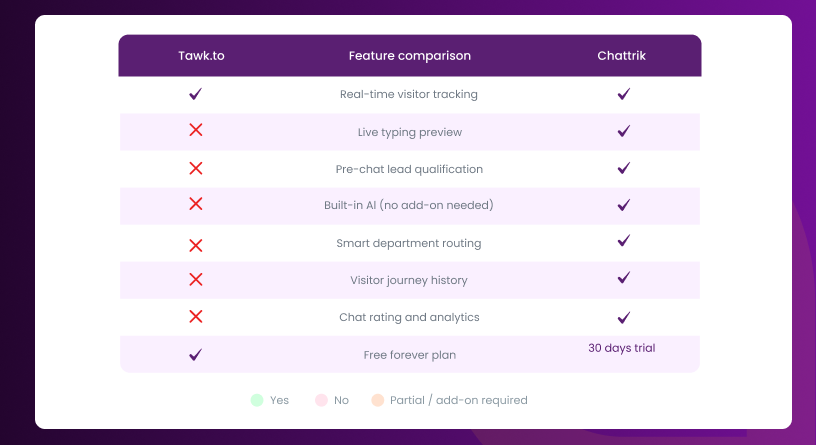
Chattrik’s real-time chat is built around one core philosophy: every conversation is a business opportunity. The platform offers real-time visitor monitoring that goes beyond just showing who’s online — it tracks current pages, search queries in the knowledge base, and interaction history so agents always start a conversation with context. This is a meaningful advantage in sales situations where knowing what a prospect has been reading can shape the entire conversation.

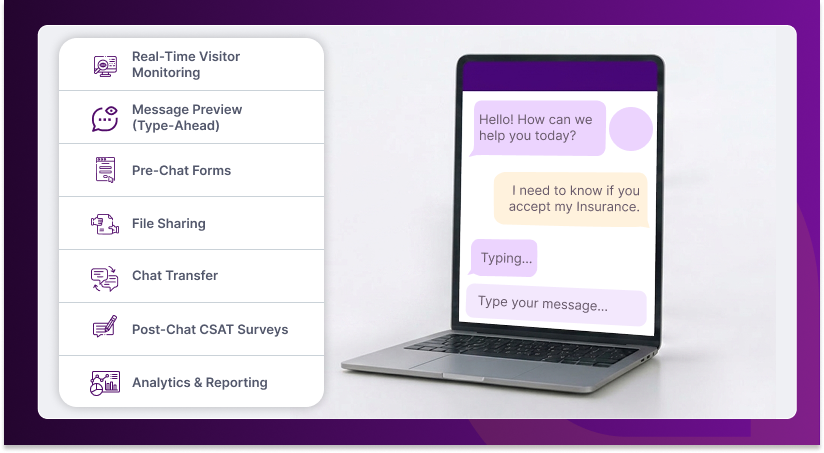
Chattrik’s pre-chat forms are particularly well-designed. Visitors can be prompted to submit key details before a chat begins, which routes them accurately, qualifies them as leads early, and gives agents full context from the first message. The platform reports that structured pre-chat inputs have improved first-response accuracy by up to 48% for some customers, and reduced resolution time by 30–45%.

Chattrik also includes a live typing preview — agents can see what a visitor is typing before they hit send. This sounds like a small detail, but in a sales or support scenario, it’s powerful. An agent can start composing a response, pull up a relevant link, or prepare context while the visitor is still typing — making response times feel almost instantaneous.

Winner: Chattrik — deeper visitor context, pre-chat lead qualification, and typing preview give it an edge for active sales teams.

Round 2: Pricing — Free vs. Structured Value

This is where the comparison gets interesting.

Tawk.to’s Pricing Model

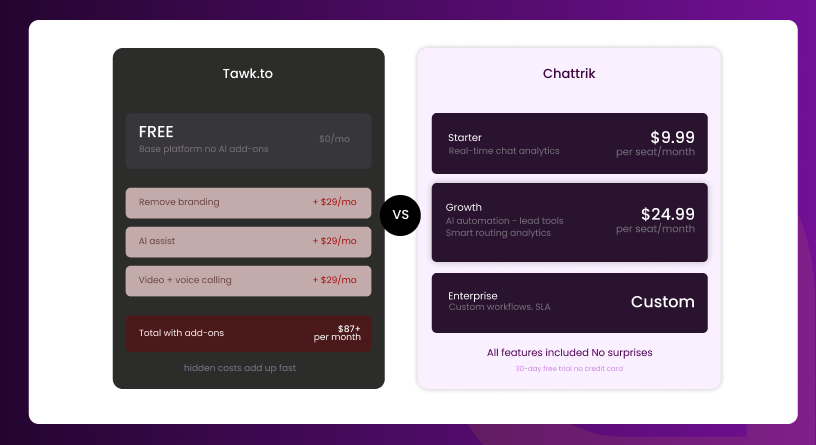
Tawk.to is free at its core — and that’s not marketing language. The base platform genuinely includes unlimited agents, unlimited chats, unlimited sites, and the full feature set with no paywalls. The company monetizes through optional add-ons:

  • Remove Branding: $29/month — removes the “Powered by tawk.to” badge and allows custom domains across the widget, emails, and knowledge base.
  • AI Assist: Starting from $29/month — adds automated chat, agent reply suggestions, multilingual automation, and knowledge base integration. The free tier includes a modest 100 AI message credits per month.
  • Video + Voice + Screensharing: $29/month — browser-based in-widget calling and screen sharing.
  • Hired Agents: Starting at $1/hour — you can have real, human chat agents answering your chats. A 24/7 coverage package runs around $728/month.

For very small businesses or solo founders, this model is exceptional. You can legitimately run a professional live chat operation for months or years without spending a dollar. The catch appears when you start to scale — each add-on is billed per property, meaning every website or app you connect pays separately. That $29 branding removal becomes $58 if you run two sites.

Chattrik’s Pricing Model

Chattrik operates on a seat-based subscription model with three clear tiers:

  • Starter: $9.99/seat/month (or $14.99 billed monthly) — ideal for small teams getting started with live chat.
  • Growth: $24.99/seat/month (or $39.99 billed monthly) — designed for growing businesses needing more flexibility and control.
  • Enterprise: Custom pricing — all-in-one solution for large teams and complex workflows.

A free trial is available with no credit card required, allowing businesses to explore the full feature set before committing. There are no setup fees, and plans can be upgraded, downgraded, or cancelled at any time.

Chattrik’s pricing philosophy is built around transparency — you know what you’re paying, what you’re getting, and there are no surprise add-on costs that stack up. For a team of five, you’re looking at roughly $50–$125/month for a fully featured, AI-powered chat solution. That’s competitive for what’s on offer.

Winner: Tawk.to for zero-budget starts; Chattrik for value at scale. If you’re a business serious about growth and need all features included without piecing together add-ons, Chattrik’s structured pricing is cleaner and more predictable.

Round 3: Automation and AI

Automation is where modern live chat platforms separate the serious contenders from the basic tools. The ability to engage visitors proactively, route chats intelligently, and respond outside business hours is no longer a premium feature — it’s expected.

Tawk.to’s Automation

Tawk.to offers basic-to-moderate automation. You can set up automated messages (triggers) that proactively reach out to visitors based on conditions like time on page, specific URLs, or visitor geography. This is useful for reaching visitors who appear to be stuck or browsing high-intent pages like pricing.

The AI Assist add-on expands this significantly. It can provide 24/7 automated responses, suggest replies to agents in real time, pull answers from your knowledge base, and support multilingual conversations. However, AI Assist is an add-on — the free plan’s 100-credit-per-month limit is quickly exhausted by any business with meaningful traffic. To run a serious automated chat operation on Tawk.to, you’ll be spending at minimum $29/month on AI Assist on top of any other add-ons.

The AI itself is noted as useful for productivity boosts rather than running fully autonomous, complex conversations. It’s AI-assisted rather than AI-driven.

Chattrik’s Automation

Chattrik was designed from the ground up with AI at its core — not bolted on as an afterthought. The platform uses what it calls “human-centric” AI: responses that feel like they’re coming from a real person who cares, not a script-following bot. This matters enormously in customer-facing interactions where tone and empathy can make or break a conversion.

Chattrik’s automation includes:

  • Smart routing: Chats are automatically directed to the right team or department based on visitor behavior, pages visited, or pre-chat form inputs. This eliminates the most frustrating part of live chat for customers — being bounced between agents.
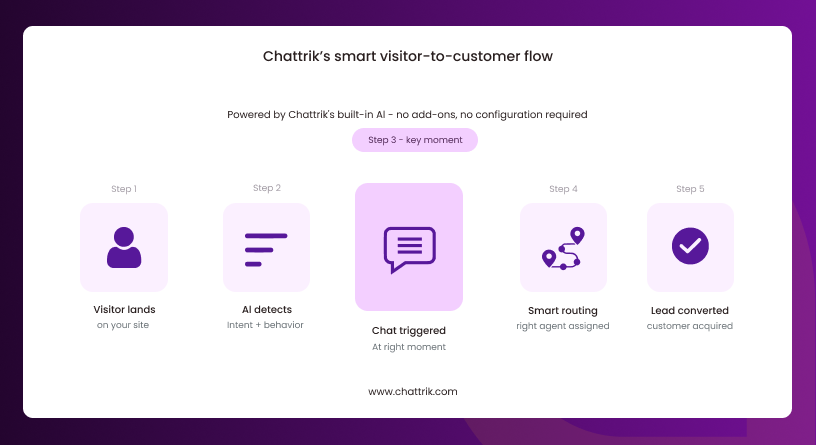
  • Proactive engagement triggers: The platform can initiate conversations at exactly the right moment based on visitor behavior signals like time on page, scroll depth, or specific page visits.
  • Automated chat flows: Visitors who arrive outside business hours aren’t simply shown an offline message — they can be engaged through automated flows that collect information, qualify them as leads, and ensure agents have everything they need for a follow-up.
  • Typing insights: The live typing preview enables agents to prepare responses before a message is sent, reducing response time dramatically.

Chattrik’s plug-and-play architecture means no industry-specific bot training is required to get started. The AI works out of the box.

Winner: Chattrik — AI is built-in rather than an add-on, and the automation is designed around the full visitor journey rather than isolated triggers.

Round 4: Sales Tools and Lead Generation

If you’re using live chat primarily as a support tool, this section matters less to you. But if you’re using it to drive revenue — and you should be — this is where the real difference lies.

Tawk.to for Sales

Tawk.to gives you the building blocks for sales: real-time visitor monitoring, proactive chat, canned responses for common pre-purchase questions, and an offline form so leads aren’t lost when agents aren’t available. The ticketing system ensures follow-ups don’t fall through the cracks.

That said, Tawk.to was fundamentally built as a support tool that works for sales, not a sales tool that includes support. There’s no native lead scoring, no pipeline tracking, and CRM integration requires third-party setups. Reviewers on Capterra and GetApp frequently mention that advanced CRM or ERP sync is missing and teams end up building manual systems to track chat-generated leads.

The Hired Agents feature is genuinely unique — at $1/hour, you can have trained, native-speaking human agents cover your chat when your team is offline. This is a real advantage for businesses that can’t justify a full customer service team but still want human coverage.

Chattrik for Sales

Chattrik is explicitly built to convert conversations into revenue. Its entire product philosophy is centred around the idea that every chat interaction is a sales opportunity. The platform provides:

  • Lead capture and qualification: Chattrik identifies potential leads from visitor behavior, collects contact information intelligently, and helps qualify them for better follow-ups. This isn’t passive — the system actively helps route and score incoming visitors based on intent signals.
  • Visitor journey tracking: Agents can see a visitor’s entire interaction history — which pages they’ve viewed, what they’ve searched for in the knowledge base, how many times they’ve visited the site. This turns cold conversations into warm ones.
  • Pre-chat forms for lead qualification: Visitors provide their details upfront, giving agents immediate context and reducing the time to first meaningful interaction. Businesses report capturing up to 40% more qualified leads using structured pre-chat forms.
  • Department routing: Sales inquiries go to sales agents. Support tickets go to support. Billing questions go to the right person. No confusion, no hand-offs, no frustrated customers.
  • Chat rating and feedback: A built-in post-chat rating system gives teams actionable data on which agents and conversation approaches are driving the best outcomes — so you can double down on what works.

Winner: Chattrik — it’s built with sales conversion as a primary goal, not an afterthought.

Round 5: Analytics and Reporting

Data is the difference between guessing and growing. How well does each platform help you understand what’s happening and make smarter decisions?

Tawk.to Analytics

Tawk.to includes real-time analytics covering active visitors, chat volume, response times, and basic agent performance. Historical reports let you track trends over time, and the dashboard provides a reasonable overview of how your support operation is running.

For most small businesses, this is sufficient. You can see how busy your chat is, how quickly your team responds, and which times of day are most active. What’s notably missing is deeper funnel analysis — there’s no native way to connect chat interactions to sales outcomes, conversion rates, or revenue attribution without third-party integrations.

Chattrik Analytics

Chattrik’s analytics are built around business impact, not just operational metrics. The platform provides:

  • Page performance insights: Understand which pages are generating the most chat activity and which are losing visitors without engagement.
  • Agent performance tracking: Detailed data on response times, resolution rates, chat ratings, and individual agent productivity. Managers can identify top performers and coach those who are struggling.
  • Visitor behavior analytics: Real-time insights into what visitors are browsing, what they’re searching for, and how they’re navigating your site — turning your chat dashboard into something closer to a CRM lite.
  • Chat rating analysis: Satisfaction scores tracked over time, with the ability to identify which interactions lead to high satisfaction and which trigger escalations.
  • Strategic planning data: Businesses using Chattrik’s analytics have reported reducing recurring service issues by up to 42% after acting on trend data, and decreasing escalations by 33% through data-driven coaching.

Winner: Chattrik — its analytics are tied to business outcomes, not just operational tracking.

Round 6: Team Management and Collaboration

When you’re managing multiple agents, shifts, and departments, the backend experience matters as much as the customer-facing one.

Tawk.to Team Tools

Tawk.to supports unlimited agents — even on the free plan — which is a significant advantage for growing teams. You can create multiple departments, assign agents to departments, and configure chat routing based on those departments. Agents can view each other’s conversations, and supervisors can monitor active chats.

The platform supports business hours configuration, meaning the widget can go offline after hours and switch to an offline form. This is standard and functional, but not particularly sophisticated.

Chattrik Team Tools

Chattrik includes robust team management built for accountability and efficiency:

  • Role-based access: Different team members have different levels of access based on their role — agents, supervisors, and admins each see what they need and nothing more.
  • Shift management: Chattrik allows businesses to manage agent shifts and set operating hours at a granular level, ensuring smooth transitions between teams.
  • Team collaboration: Multiple agents can collaborate on the same chat when needed, and the full conversation history ensures continuity even when a customer returns days later.
  • Trusted Domains feature: A security-focused feature that restricts the chat widget to approved websites only — important for businesses that white-label their chat or want to ensure their widget isn’t misused on unauthorized domains.

Winner: Tawk.to for free unlimited agents; Chattrik for structured team management and accountability tools.

Round 7: Setup, Ease of Use, and Support

The best software is the one your team will actually use.

Tawk.to

Tawk.to is renowned for being easy to install. A simple JavaScript snippet is all it takes to get the widget live on your website, and the platform integrates natively with WordPress, Joomla, Magento, Shopify, and dozens of other platforms. The dashboard is functional, though some users find it dated-looking compared to newer tools.

Tawk.to offers 24/7 live support via chat and email — a notable commitment for a free product. The Help Center is comprehensive, and the large user base means community answers are easy to find.

The learning curve is gentle for basic use, but some features — particularly automation rules and the knowledge base — take time to configure properly. Reviewers occasionally note that security settings require manual attention, and message routing for complex setups can demand more effort than on premium platforms.

Chattrik

Chattrik runs entirely in the browser — no installation required. Setup is described as genuinely fast, with many teams going live the same day they sign up. The interface is modern and designed to reduce configuration overhead: you set your chat rules, team routing, and operating hours once, and the system handles the rest.

The plug-and-play architecture is a genuine differentiator. Unlike some platforms that require you to train bots or configure complex decision trees before automation kicks in, Chattrik works intelligently from day one. Customer reviews highlight that the setup is “quick and simple” and the workflow fits naturally into daily operations.
For Pakistani businesses in particular, Chattrik’s local support team and regional context offer an advantage that no global platform can match. When you have an issue, you’re talking to someone who understands your market.

Winner: Tie — Tawk.to wins on breadth of integrations and community support; Chattrik wins on modern UX and regional relevance.

The Bigger Picture: Who Is Each Platform Built For?

After examining both platforms across every major dimension, a clear picture emerges.

Tawk.to is ideal for:

  • Solo founders and micro-businesses on zero budget
  • Businesses where support volume is low and sales automation isn’t a priority
  • Teams that want unlimited agents without a subscription cost
  • Organizations that need unique add-ons like hired human agents or video calling
  • Businesses with high website counts where free access to all sites matters

Chattrik is ideal for:

  • Businesses in Pakistan and South Asia that want a locally built, contextually relevant solution
  • Sales-focused teams where converting visitors into customers is the primary goal
  • Growing companies that want structured pricing with predictable costs
  • Organizations that need built-in AI, smart routing, and lead qualification without paying for each as a separate add-on
  • Teams that value accountability, analytics, and data-driven improvement
  • Any business that wants a modern, clean platform that’s easy to learn and quick to deploy
Final Verdict: Which Platform Is Better for Sales, Automation, and Growth?

If your primary metric is cost at the starting line, Tawk.to is unbeatable. A free, fully featured live chat platform that doesn’t ask for your credit card is a remarkable offer, and for businesses in the earliest stages of their growth journey, it makes complete sense to start there.

But if your metrics are revenue, growth, and efficiency, the calculus shifts.

Chattrik was built from the ground up with a single question in mind: how do we turn every website conversation into a business outcome? The result is a platform with deeper visitor intelligence, smarter automation, cleaner lead capture, and better analytics — all packaged in a transparent pricing model that scales with your business rather than surprising you with add-on sticker shock.

There’s also something meaningful about Chattrik’s origin. As Pakistan’s first locally built, AI-enabled live chat software, it carries a level of regional understanding, cultural context, and local accountability that a globally distributed product simply can’t replicate. For Pakistani businesses trying to compete at a higher level, that matters.

Tawk.to built its empire on being free. Chattrik is building its future on being better.

For businesses serious about sales, automation, and sustainable growth — Chattrik is the stronger investment.

Ready to see Chattrik in action? Start your 30-day free trial at chattrik.com — no credit card required.

Chattrik vs WhatsApp for Business: Which Platform Actually Drives Conversions in 2026?

Introduction: The Real Question Businesses Should Be Asking

For the better part of the last decade, WhatsApp has been the default communication channel for businesses across the world. Whether it’s a small retailer confirming orders, a real estate agent responding to inquiries, or an e-commerce brand answering product questions, WhatsApp has become deeply embedded in how businesses interact with customers.

At first glance, this makes perfect sense. It’s fast, familiar, and widely used. Customers are already there, and businesses simply follow.

But as we move deeper into 2026, the expectations around customer communication have fundamentally changed. Customers no longer just want responses—they expect instant engagement, personalized guidance, and frictionless experiences that lead them toward a decision. At the same time, businesses are no longer satisfied with simply “chatting.” They want measurable outcomes: more leads, higher conversions, and scalable systems that don’t break as they grow.

This is where a critical distinction emerges—one that many businesses overlook.

There is a difference between a communication tool and a conversion system.

WhatsApp, for all its strengths, was built to enable conversations. It was never designed to structure customer journeys, qualify leads, or optimize conversions. As a result, many businesses relying heavily on WhatsApp find themselves stuck in a reactive loop—responding to messages, chasing leads, and manually handling processes that should be automated.

Chattrik, on the other hand, represents a different category altogether. It is built not just to facilitate communication, but to engineer outcomes—to turn website visitors into leads, conversations into opportunities, and interactions into conversions.

This blog is not just a surface-level comparison. It is a deep analysis of how both platforms function in real business environments, where they succeed, where they fall short, and ultimately, which one actually drives growth in a modern, competitive landscape.

The Evolution of Customer Communication: From Replies to Results

To fully understand why this comparison matters, it’s important to step back and look at how customer communication has evolved over time.

In the early days, business communication was largely linear and slow. Customers would send an email or make a phone call, and businesses would respond when they could. There was little expectation of immediacy, and even less emphasis on experience. The process was transactional.

Then came the rise of instant messaging platforms like WhatsApp. This marked a significant shift. Communication became real-time, informal, and far more accessible. Businesses could respond instantly, and customers appreciated the convenience. For a while, this felt like a major leap forward—and it was.

However, as digital ecosystems matured, so did user expectations. Customers began interacting with multiple brands across multiple platforms. They experienced faster responses, smarter systems, and more personalized interactions. Gradually, “instant replies” stopped being impressive—they became the baseline.

This is where the third phase of communication began to take shape.

Modern businesses are no longer judged solely on how quickly they respond, but on how effectively they guide users. A customer visiting your website today expects more than a chat window—they expect a system that understands their intent, helps them find what they’re looking for, and nudges them toward taking action.

In other words, communication has evolved from being reactive to being strategic.

This evolution is exactly where the gap between WhatsApp and Chattrik becomes most visible.

WhatsApp for Business: Strengths, Familiarity, and Structural Limitations

There’s a reason WhatsApp continues to dominate business communication—it does certain things exceptionally well.

The first and most obvious advantage is its sheer reach. With billions of users worldwide, WhatsApp provides immediate access to a massive audience. Businesses don’t need to convince customers to download a new app or learn a new system. The barrier to entry is virtually nonexistent.

The second advantage is familiarity. Customers are comfortable using WhatsApp. They understand how it works, they trust the interface, and they engage with it naturally. This reduces friction in communication, which is always a positive.

Additionally, WhatsApp offers high open rates. Messages sent through the platform are far more likely to be seen compared to emails, making it an effective channel for direct communication.

For small businesses or individuals operating at a limited scale, these benefits can be sufficient. WhatsApp can function as a simple, direct line between the business and the customer.

However, the moment you begin evaluating WhatsApp through the lens of growth, scalability, and conversion optimization, its limitations start to surface—and they are not minor.

The most fundamental limitation is that WhatsApp is inherently reactive. It does not initiate conversations. It does not engage users on your website. It does not identify high-intent visitors or prompt them at the right moment. Everything depends on the customer taking the first step.

This might not seem like a big issue at first, but in practice, it leads to a significant loss of opportunity. Many website visitors never reach out—not because they aren’t interested, but because there is no system guiding them to do so.

Another critical limitation is the absence of a structured conversion funnel. WhatsApp does not provide a framework for moving users from curiosity to decision. Conversations are unstructured, often repetitive, and heavily dependent on manual input.

Over time, this creates inefficiencies. Teams spend hours answering the same questions, qualifying leads manually, and trying to manage conversations without any centralized system. As volume increases, this becomes increasingly difficult to sustain.

Automation, which is essential for scaling any modern business, is also limited on WhatsApp. While basic features like greeting messages and quick replies exist, they fall far short of what is needed to build intelligent, multi-step workflows. There is no real capacity for conditional logic, behavioral triggers, or dynamic interaction flows.

As a result, businesses relying solely on WhatsApp often find themselves trapped in a cycle of manual effort. Growth becomes directly tied to team size, and efficiency declines as demand increases.

Chattrik: A Platform Designed for Conversion, Not Just Communication

Chattrik approaches customer communication from a completely different perspective.

Instead of focusing on how quickly a business can respond, it focuses on how effectively a business can convert.

This shift in perspective changes everything.

At its core, Chattrik is designed to operate within the context of your website and your customer journey. It doesn’t wait for users to reach out—it actively engages them. When a visitor lands on your site, browses a product, or spends time on a particular page, Chattrik can trigger interactions at precisely the right moment.

This proactive engagement is one of its most powerful capabilities. It transforms passive traffic into active conversations, significantly increasing the likelihood of capturing leads.

Beyond engagement, Chattrik introduces structure into conversations. Instead of relying on free-form chats, it enables businesses to design interaction flows that guide users step by step. These flows can be used to qualify leads, collect information, recommend products, or even schedule appointments.

This level of structure not only improves efficiency but also enhances the user experience. Customers receive clear, relevant guidance instead of generic responses, which makes the interaction feel more purposeful and valuable.

Automation within Chattrik is also fundamentally different from what WhatsApp offers. It is not limited to simple replies—it extends to entire workflows. Businesses can create multi-step sequences that adapt based on user input, ensuring that each interaction is both personalized and scalable.

Another critical advantage is visibility. Chattrik provides insights into how users interact with your system—where they drop off, what they respond to, and how conversations translate into conversions. This data is essential for optimization, allowing businesses to continuously refine their approach.

In essence, Chattrik functions not just as a communication tool, but as a conversion engine embedded within your digital ecosystem.

The Core Difference: Conversations vs Systems

At a surface level, comparing WhatsApp and Chattrik might seem like comparing two communication platforms. But in reality, they operate on entirely different paradigms.

WhatsApp facilitates conversations. It provides a channel through which messages can be exchanged. Everything beyond that—lead qualification, follow-ups, tracking, optimization—must be handled externally or manually.

Chattrik, on the other hand, is built as a system. It integrates communication into a broader framework that includes lead generation, automation, and analytics. Conversations are not isolated—they are part of a structured journey designed to produce a specific outcome.

This distinction has profound implications.

When you rely on conversations alone, your results are unpredictable. Some leads convert, others don’t, and it’s often unclear why. There is no consistent process guiding users toward a decision.

When you implement a system, outcomes become more predictable. You can identify what works, replicate it, and scale it. You can reduce friction, improve efficiency, and ultimately increase conversions.

This is why businesses that transition from WhatsApp-centric workflows to platforms like Chattrik often see significant improvements—not because they are communicating more, but because they are communicating more strategically.

Real-World Impact: What This Means for Different Industries

The differences between these platforms become even more apparent when applied to real-world scenarios.

In e-commerce, for instance, timing is everything. A customer browsing a product page may have questions or hesitations. If those are not addressed immediately, the likelihood of abandonment increases. WhatsApp cannot intervene at this stage—it can only respond if the customer chooses to reach out.

Chattrik, however, can engage the user directly on the product page, offer assistance, recommend alternatives, or even provide incentives. This reduces friction and increases the chances of conversion.

In real estate, the ability to qualify leads is crucial. Not every inquiry represents a serious buyer. With WhatsApp, agents often spend time manually filtering through messages, trying to identify high-intent prospects.
Chattrik automates this process. It can collect relevant information upfront, categorize leads based on intent, and prioritize follow-ups accordingly. This not only saves time but also improves conversion efficiency.

For service-based businesses, the difference lies in organization. Managing appointments, follow-ups, and client communication through WhatsApp can quickly become chaotic. There is no structured pipeline, and important details can easily be overlooked.

Chattrik introduces order into this process. It enables businesses to create clear workflows, manage interactions systematically, and ensure that no opportunity is missed.

Conclusion: The Future Belongs to Conversion-Driven Platforms

As we look ahead, one thing is clear: the role of communication in business is evolving.

It is no longer enough to be available. It is no longer enough to respond quickly. Businesses must be able to guide, optimize, and convert.

WhatsApp will continue to play a role in communication. It is familiar, accessible, and effective for basic interactions. But it is not built to handle the complexities of modern customer journeys.

Chattrik, by contrast, is designed for the realities of today’s digital landscape. It recognizes that communication is not an end in itself, but a means to an outcome.

If your goal is simply to talk to customers, WhatsApp will suffice.

But if your goal is to grow, scale, and convert consistently, then the choice becomes much clearer.

Chattrik is not just a better tool.

It is a better system.

Live Chat Response Time Expectations in the Middle East: 2025 Insights

Introduction

As we move into 2025, we see customers across the world more concerned about live chat response time. In the Middle East region, the live chat response time serves as a key performance indicator for brands focused on digital customer engagement and service. The rapid digital transformation across the Gulf Cooperation Council (GCC) countries, particularly those in the UAE, Saudi Arabia, Qatar, and Kuwait, has resulted in response times being elevated from simply a support KPI to a key component of measuring brand performance, customer satisfaction, and differentiation against competitors. This blog underlines key trends related to live chat response expectations in the Middle East. It elaborates targeted service sectors where customers expect a better live chat response.

Importance of Response Time for Middle Eastern Customers

The expectations of customers continue to change at a rapid pace, with consumers being able to compare almost every brand with the quickest digital experiences they have had. For example, a consumer may have had an experience with an instant chat response, a response to a push notification, or even through real-time social media messaging. As such, live chat response time within the Middle East will be an important element of any customer experience (CX) strategy.

Customers from multiple sectors (e.g., e-commerce, banking, travel, healthcare) expect to receive information very quickly after they have clicked on a chat widget or opened a messaging channel; therefore, live chat is quickly becoming the preferred means for many customers due to its immediacy and response time capability.

A Glimpse of Customer Experience Benchmarks

Customers desire quick response times when utilizing live chat to reach a customer service agent. It is important to know that an initial contact time of less than 30 seconds is expected to deliver an “excellent” standard of service. Based on a global response time standard developed in 2021, it is found that over 80% of customers expected a response time to their request/concern within 3 minutes (or less) during an online chat interaction. Customers generally request even faster response times.

The above-mentioned typical response time ranges from under 60 seconds to 3 minutes (or more). Ultimately, there is a massive percentage of customers who will abandon their request (and move on without your assistance) if their request has not received any reply in 3 minutes or more.Live chat is regarded as an “on-demand” communication method, thus providing the greatest expectations for response speed. Response time is important in all regions of the world, but it is considered even more important in the Middle East due to cultural and economic differences.

Regional Trends: Middle East CX Expectation

Mobile-First, Real-Time Consumers

Middle Eastern Consumers are primarily mobile users. Therefore, mobile messaging applications such as WhatsApp have created an immediate response time. Therefore, customers will naturally expect the same level of instantaneousness when communicating with live chat through both company websites and mobile applications.

E-Commerce and Conversion Optimization

Ecommerce customer experience in the Middle East with instant buying options, illustrating live chat impact on Chattrik blogs

Since E-Commerce is a growing sector in the Middle East, customers expect a real-time and proactive response from live chat support provided by the platforms. Most brands in the United Arab Emirates (UAE) and Saudi Arabia have implemented live chats as a way to increase conversions on their websites. By answering buying questions instantly, live chat integration helps eliminate shopping cart abandonment and delayed customer purchase decisions.

Banking, Fintech, and Trust

Middle Eastern individual using a laptop for digital banking activities, showcasing secure online financial services.

Since Middle Eastern customers are more familiar with financial institutions than other markets, they expect a quick response in all areas. Therefore, when a financial institution addresses a customer’s request, the customer expects their request to be fulfilled as soon as possible without having to wait in long lines or for extended periods. The result of this is that marketing teams utilizing live chat are able to build customer trust and give customers the security to know that they can continue to use the same company over and over again.

Travel & Hospitality Demand Real-Time Solutions

Live chat conversation between traveler and travel agent providing instant booking assistance

Customers of the travel and hospitality industry also expect an effective live chat response time from companies. Many companies within this category, including airlines such as Emirates and Etihad Airways, depend upon their customer service agents answering questions in real-time, including use cases such as booking changes, check-in Issues, and rewards program questions.

Key Benchmarks to Aim For

Here’s how every business can set expectations for how long to wait until a response is received.

Response Time Window Customer Satisfaction Impact
< 10 seconds Extremely high satisfaction levels
10 – 30 seconds Very strong and engagement preserving
30 – 60 seconds Good – acceptable in most use cases
1 – 3 minutes Average – risk of frustration.
> 3 minutes Poor – likely to increase abandonment


For all brands operating in the region, providing responses within 30 seconds demonstrates an inherent eagerness to be responsive, and this sense of urgency resonates with the needs of every native-born digital user within GCC (Gulf Cooperation Council) countries.

How Businesses Can Meet These Expectations

To meet these expectations with top-tier customer satisfaction levels, many companies are currently utilizing the following methods:

24/7 Live Chat Support in Real-Time

24/7 real-time live chat assistance enhancing online customer experience

For Middle Eastern customers, companies are putting in all-out efforts to enhance engagement with customers. To maintain constructive engagement, businesses should ensure 24/7 live chat support for customers. The real-time conversation can help meet the expectations: instant support, empathic response, and trusted conversation.

Intelligent AI Chatbots

AI-driven bots allow businesses to “automate” the initial contact acknowledgement and can respond to ~80% of common questions without the need for any live agents. This frees them up to provide personalized support for more complex questions/queries.

Automated Routing or Smart Triggering

Many chat solutions allow businesses to “route” incoming chats automatically for more accurate, faster reply times based on the specific query type or the user’s past activity/behavior patterns.

Prewritten Responses

Agents utilizing prewritten responses to common FAQs save plenty of time as compared to responding to each query as it comes in via message.

Real-Time Chat Tracking
By monitoring key metrics related to real-time chat engagement (like customer satisfaction and average response times), companies can identify gaps in their processes and determine solutions to improve future contacts with customers.

Conclusion

Customers across the world prioritize instant response as far as customer service is concerned. Middle Eastern customers consider response time an essential element for any business. It’s not simply a measurement of performance but rather a way for companies to set themselves apart from their competition. The ability to deliver quick and efficient chat support improves customer satisfaction and enhances sales conversion rates. It has become a customer requirement across multiple industries, including retail, banking, and other sectors.
Companies that continue to provide quality service and exceed customers’ expectations regarding response times will have a significant advantage over their competitors in rapidly evolving digital markets. If you want to enhance your business with features of proactive live chat response time, try Chattrik and get 100% customer satisfaction in the Middle East region.

The Essential Guide to Live Chat Etiquette

Introduction

Live chat can be one of the most impactful customer service strategies in our digital-first world. With the growing scope of fast response times, efficient communication, and personalized interaction, live chat has become an essential service point for companies large and small. However, implementing a live chat is one thing; being professional, consistent, and most importantly, clear, will allow all interactions to be a positive representation of your brand. This is where live chat etiquette is relevant—the best practices that will help your agents communicate well while conveying politeness, empathy, and efficiency. Good live chat etiquette not only prevents miscommunications but also enhances the entire customer experience, gains loyalty, and even increases revenue. By adhering to good etiquette, they will trust your practice, reduce friction in the customer experience, and create unforgettable experiences that they will want to return for. In this guide, we will present the principles of live chat etiquette and how those principles will enhance your customer service approach.

Understanding Live Chat Etiquette

Live chat protocol describes the professional, courteous, and effective behavior agents display to customers online. While there is a specific protocol related to customer service in general, live chat protocol discusses the finer points of written communication in a digital space, such as tone, clarification, timing, and personalization.

A well-established live chat protocol is important for establishing trust, reliability, and a positive experience. Polite, timely, and effective responses enhance customer engagement, loyalty, and enjoyment. However, the poor protocol could damage your brand.

Best Practices for Live Chat Etiquette

Having live chat etiquette gives every interaction a sense of professionalism and helpfulness, while being as efficient as possible for the customer. Below are the best practices every business should implement:

Fast Responses

Fast responses are important when it comes to live chat. Customers expect responses almost instantaneously; if they do not receive a fast response, they may become frustrated and abandon chat or your site entirely. Ideally, the first response should occur no later than 30 seconds, and follow-up responses should be delivered as rapidly as possible. Customer care that acknowledges the customer’s time and immediately works to resolve an inquiry and showcases attention and respect for the customer’s time and relationship. Fast responses increase customer experience.

To assist with fast responses, businesses can implement a variety of tools, including AI chat assistants, a pre-set greeting, and smart notifications that will ping agents about incoming messages. All of these different tools will help reduce the time for response without lacking personalization and/or quality of the conversation. When a customer experiences a timely response, it will increase customer satisfaction and loyalty, in addition to demonstrating reliability with your brand, encouraging customers to get your services again.

Use of Professional and Polite Language

Using language that is courteous, appropriate, and positive is essential. Do not use slang, jargon, or an overly friendly or informal tone unless your brand voice specifies that. Politeness signifies professionalism; however, friendliness makes it all approachable. The use of words like “please” and “thank you” has great value for the first impression you create.

Conveying professionalism and polite language also helps to clarify conversations, reducing the likelihood of misunderstandings and confusion. A calm and respectful tone introduces less likelihood of conflict and a more open dialogue in dealing with angry or upset customers. We are advocating training all agents to use positive phrasing patterns, active listening cues, and appropriate language in a polite way as much as possible to enhance your brand’s credibility and commitment to excellent customer service.

Personalization

Referring to customers by name and addressing their unique issues provides a more interactive experience. By employing the context of previous conversations or previous purchase history, you can include tailored responses. Personalization communicates that the customer is valued as a person and not just another inquiry.

The ability to reference more than just a customer’s name could be referencing past purchases or recognizing past support conversations, assuming browsing activity gives some insight into needs itself. Personalization can show attentiveness and more effort, building a stronger emotional connection to the customer.

When a conversation has personalized characteristics to make it appear not just like every other routine question on the topic, the customer could feel how the experience is relatable. When personalization is in the form of excitement on interaction, continued repeated engagement, or repetition and engagement feels more likely. Even though not every interaction will have the same model, try to keep the process conversational and relational.

Be Clear and Concise

Live chat messages need to be clear to the customer and easy to understand, and they should be concise to allow quick reading. Avoid long paragraphs or overly technical explanations. Break text into chunks that are easy to digest, use bullet points to list action steps, and provide a short action plan. A clear message and message structure reduce confusion and increase the speed of issue resolution.

Clarity and conciseness help avoid using unnecessarily complicated language or ambiguous terms that the customer might not understand, or potentially confuse the customer. Clear step-by-step instructions or key points identified ensure the customer can easily follow you. A concise message structure not only reduces time to resolve the issue but also creates a more professional chat experience that adds to the overall pleasant experience for customers, lending credence to the brand’s message.

Active Listening

Even if only text-based communication is possible, you should still show the customer you have understood their concern. Summarize their issues as you ask for clarification, or summarize at the time of resolution. Active listening builds trust in the customer, and active responses address real issues.

Active listening in real-time customer chats includes simply acknowledging feelings (This statement recognizes how they are feeling) and displaying empathy according to one’s response (e.g., “I understand your concern” or “Thanks for explaining”).

These serve as indicators that you are paying attention and are genuinely interested. By listening carefully and confirming details, agents will deliver even more accurate answers directed specifically to the customers, ensuring customer satisfaction and trust. You are successfully resolving issues while further gaining the customer’s trust in the brand.

Openness and honesty

Honesty is being open about wait times, item availability, or anything else that may cause disappointment. Do not make a commitment that you cannot fulfill – ever, it diminishes trust. Openness and honesty build credibility and a greater chance for ongoing brand loyalty or trust

Openness and honesty clearly communicate the next steps and challenges that can arise while resolving customer issues. By providing realistic expectations or informative details, agents build clarity regarding what to believe in the information and build confidence in the brand. Customers tend to appreciate straightforward customer communication, even if the post is not ideal, but it shows that you have integrity; and reliability = values, reliability, trustworthiness = believes customer will return to the brand long term.

Showing Empathy and Patience

Empathy is essential for providing good live chat support. When customers are frustrated and need assistance, it is important to acknowledge their frustrations and show them empathy. Remain calm and patient, even with upset or upset customers. When engaging with customers, providing an empathetic response has the ability to de-escalate a frustrating situation and perhaps leave the customer with a positive feeling even if the resolution to their issue was complicated.

When covering empathy and patience, it is also important to note that practicing empathy and patience requires agents to adjust their communication style according to the customer’s emotional view of the interaction. By being patient and taking the time to listen, validate, and respond to customer concerns, you can turn a potentially negative experience into a good one. When agents listen patiently to customers, even in difficult situations, they are demonstrating professionalism and care for the customer, which in turn builds trust, encourages cooperation, and contributes to customer loyalty.

Using Emojis and Formatting Correctly

Emojis can also help to convey a friendlier interaction with customers, although they should be used sparingly and only when it is aligned with your brand voice. Formatting tools, like bold text or bullet points, can be used to help draw attention to important information to improve readability. When used thoughtfully, emojis well and formatting tools will help, but not distract, from the message being conveyed in the customer engagement.

Using emojis and formatting effectively also helps convey tone and emphasis in text-based communication, which can otherwise feel impersonal. Strategic use of bold text, italics, or bullet points can guide the customer’s attention to key instructions or important details, making messages easier to scan and understand. When applied thoughtfully, these tools enhance readability, reduce confusion, and contribute to a friendly yet professional chat experience.

Following Up and Confirmation

Never terminate the chat without confirming the customer’s issue is successfully resolved. Ask the customer if they need any further assistance, or if there will be next steps in the process that you can clearly outline. Following up reassures the customer that your business is thorough, attentive, and genuinely interested in customer satisfaction.

Privacy and Professional Boundaries

You must always respect the customer’s privacy. Never request unnecessary personal information from a customer, and never share good or bad information without permission. Professionalism is paramount, so do not make the chat a personal conversation; always keep it focused on the customer and the issues they need assistance with, and avoid chatting too familiarly or making personal comments.

These best practices form the essence of effective etiquette for live chat while allowing for responsive and focused conversations with your customers. When business incorporates these techniques into customer interactions, they improve customer satisfaction while also building customer loyalty, trust, and reputation over time.

Common Mistakes Regarding Live Chat Etiquette

Fueled by government vision, consumer expectations, and technological innovation, live chat adoption is picking up speed across all sectors. Among the best adoption trends include:

National Initiatives for Digital Transformation

Even when intending to offer customers a positive experience, businesses will often make easily avoidable mistakes during live chat exchanges that can disrupt the experience for the customer. Being aware of some common live chat flops can help to ensure your customer support stays professional and guided around the customer’s experience.

Ignoring Messages or Slow Responses

The issue of customers’ messages not being answered in a timely manner or simply being ignored is probably one of the most significant issues you are going to experience. Not addressing messages in a timely manner can cause understandable frustrations for users and is likely to result in them leaving or abandoning the live chat. Therefore regular and timely message responses are critical in ensuring they continue to engage and have positive experiences with your business.

In addition, slow or repeated slow responses are likely going to have some type of impact on a brand’s reputational value; that is, customer may feel as though the brand simply doesn’t care enough to respond, and therefore they may choose to leave and not return. To mitigate this issue businesses might consider implementing some type of feature such as real-time notifications, suggestions for ai-assisted chat, or queue systems to ensure every message is engaged with in a timely fashion. In addressing customers promptly and effectively, companies allow the customer to stay engaged, whilst also enabling customers to feel the company is professional and reliable, which builds trust and encourages them to return.

Using Automated Responses that are Not Customized

Although automation definitely can “make life easier,” using non-customized and generic responses will result in an interaction that is not memorable. Customers want to feel that a live agent is considering the nuances of their question and not that there is someone responding to them generically. Customer personalization is part of establish trust and rapport.

Overuse of Emojis or Casual Language

Using emojis and conversational style can provide a fun conversation, but if you go overboard it will also feel unprofessional. Finding a balance of fun and professionalism will cause your messages to be relatable and professional.

Lack of Follow-up and Ending the Chat

Ending a chat without confirming that the customer issue has been solved will lead someone to feel unsatisfied. Summarize the solution, offer to assist with anything else, and ensure the chat customer feels supported before closing the chat.

Avoiding these pitfalls is vitally important in order to establish good live chat etiquette. By promptly responding, personalizing the anticipating messages, keeping it professional, and most importantly, following up, a business can have a delightful and memorable interactions that lead to customer loyalty.

Advantages of Following Live Chat Etiquette

The Middle East is a center for customer support that utilizes AI. Businesses have to deliver a fast-accurate-multilingual service, so businesses rely on advanced technologies of AI to strengthen their live chat.

Adopting proper live chat etiquette is not just about navigating professional communication; there are clear advantages linked for both customers and businesses. Professionals who communicate with politeness, act fast, and respond to dissatisfactions in a thorough manner will make a customer feel valued and respected, therefore enhancing their overall satisfaction and future interactions with that company, creating a loyal customer. A clearly stated, concise, and bring attention to considerate communication can also improve issue resolution. Active listening paired with clarifying questions and giving the right answer can decrease misunderstandings while lowering to need to escalate the situation to someone higher within the support structure.

Live chat is a direct representation of your brand. Conduct and courtesy are important factors in establishing that credibility and trust. Businesses that transfer etiquette consistently develop a good reputation, and customers will even self-promote brands that are always providing helpful and kind online support. Proper live chat etiquette can also directly influence conversions for e-commerce and sales types of businesses. Given good suggestions, rapid responses and empathetic support will commonly nudge customers towards the completion of purchase process and engage with their services. By valuing live chat etiquette, businesses can establish a frictionless customer experience which successfully resolves the issue, creates a more engaged relationship, enhances your brand reputation, and promotes longevity for the business.

Tech & tips for ensuring good live chat etiquette

Good live chat etiquette can be easier and more rewarding with the use of AI-assisted chat solutions, in combination with certain tools and best practices. For example, chat solutions that are AI-assisted and provide fast customer responses can allow agents to continue working with the customer while they attend to complex questions and provide customers with timely responses. A company may also use chat scripts and templates that will support its efforts to improve consistency across chat interactions, while staying professional and clear.

Regular training for customer service agents is also an important step in reinforcing good etiquette, continuing their professional development in problem-solving, and updating their skills and knowledge of best practices. Monitoring and reviewing chat transcripts also allows businesses to evaluate performance for improvement, while making sure every customer service agent is conducting every conversation with professionalism. Using these variables together allows any company to present friendly, quick, and professional live chat support consistently.

Conclusion

For many nowadays, live chat etiquette matters in today’s professional landscape. It helps ensure communication is professional, clear, and courteous. Sharing and courting best practices can enhance the customer experience, foster trust and loyalty, and even boost conversions, assuming, of course, you adhere to the etiquette. Implement professional etiquette today to elevate your live chat function into a powerful and intentional outreach tool to create a long-term relationship with your patrons.

Implementing effective live chat etiquette helps food businesses maintain their competitive advantage in today’s digital-first marketplace. Today, customers expect businesses to provide instant, helpful, and polite support, and the brands that consistently deliver will always have the edge over their competitors when it comes to long-lasting customers. By implementing strong etiquette, a business can solve the customer’s concern in an efficient way, while also creating a unique experience that can convert a customer into a brand advocate from their first encounter.

Is your chat etiquette helping you win customer trust and loyalty?

Elevate every conversation with Chattrik.

Why Website Visitors Leave Before Buying

Introduction

A customer visits your site, searches for some products in the cart, and then disappears. No response. Just another mark added in bounce rate statistics.

The e-commerce market has a common trend of customer disappearance. Baymard Institute published a study last year in 2024 that the average online shopping cart abandonment rate is 69.57%. It means that 7 out of 10 customers leave the cart without shopping.

So, the question arises why customers are not interested in shopping online. And what strategy will you apply to develop interest in customers for online shopping?

Let’s explore the main reasons for low e-commerce sales, along with robust solutions to reduce bounce rate, upgrade customer journeys, and refine website conversations.


Why Customers Don’t Buy Online: Key Reasons for High Bounce Rates

1. Poor Website Experience (Slow, Confusing, or Not Mobile-Friendly)

When visitors can’t navigate easily, or pages take too long to load, they’ll abandon the journey before buying. 57% of users do not like to do business with poorly made and managed mobile sites. The bounce rate increases by 32% when a website takes a time to load from 1 second to 3 seconds to load.
When visitors are unable to navigate easily or pages become unresponsive, they’ll skip the online shopping.

Six thousand consumers across the US and Europe were asked about their online shopping behavior and views on website functionality. 60% of consumers say they abandon purchases due to poor user experience on websites. E-commerce companies are losing an average of 5 purchases a year per consumer, with 8% of consumers abandoning more than 10 purchases.

2. Lack of Trust or Security Concerns

Online retailers have started giving plenty of offers that have increased the online traffic to a great extent. Regularly, online giants like Amazon, Flipkart, AliExpress, etc., are advertising huge discounts and offers that are luring a large number of customers to shop from their websites. Companies like Nykaa, MakeMyTrip, Snapdeal, Jabong, etc. are offering attractive promotional deals that are enticing customers.

Security and Privacy: A Top Priority for Customers

Despite so many advantages, some customers may feel online shopping is risky and not trustworthy. The research proposed that there is a strong relationship between trust and loyalty, and most often, customers trust brands far more than a retailer selling that brand. In the case of online shopping, there is no face-to-face interaction between seller and buyer, which makes it non-socialize, and the buyer is sometimes unable to develop trust.

Trust in the e-commerce retailer is crucial to convert potential customers into actual customers. However, the internet provides unlimited products and services, but along with those unlimited services, there is perceived risk in digital shopping, such as mobile application shopping, catalogue or mail order.

Online visitors are always on alert. Red flags are raised in case of missing SSL certificates, unconvincing customer reviews, or unclear return policies. If there is negligence on your site, payment details will not be provided on your site by the customer.

3. Hidden Costs at Checkout

Unreasonable cost or unexpected delivery is one of the biggest cart abandonment reasons.

A study by Baymard Institute found that 48% of shoppers with actual purchase intent (i.e., those who aren’t window shopping) abandon carts due to extra costs.

Almost half of all online shoppers in Baymard’s 2022 study reported that the extra costs were too high for them to complete their purchase. These costs include shipping, tax, and other extra fees, like customs costs, as the leading cause of abandoned carts.

4. Complicated Checkout Process

Complexity isn’t always obvious—it can creep in through:
Too Many Steps: Why ask for shipping info, billing info, payment method, account creation, and a subscription opt-in—all on separate pages? A marathon checkout feels endless.

  • Mandatory Account Creation:
    Few things scream “commitment issues” like forcing someone to sign up just to buy a $10 candle.
  • Unclear Progress Indicators:
    If users don’t know how many steps are left, they assume the worst (five more pages? Ten? The rest of their lives?).
  • Unnecessary Form Fields:
    Do you really need to know someone’s middle name or favorite pet from childhood? No, you don’t.
  • Payment Complications:
    Unsupported cards, buggy autofill, or confusing error messages can make people think, “Forget it, I didn’t need that avocado slicer anyway.”

5. No Real-Time Customer Support

Customers leave the site immediately when they get stuck and can’t find help. A live chat solution like Chattrik helps customers by answering questions instantly. This reduces the cart abandonment ratio at large.

Add Live Chat to Your Store Today – Keep Customers Engaged Before They Leave

6. Payment Complications:

Generic shopping does not develop interest in customers. Customers look for particular products, suggestions, offers, and recommendations that they want, and browse online.

How to Reduce Bounce Rate and Prevent Cart Abandonment

This is a fact that customers don’t accept excuses. Now, look at the actionable strategies that are bound to reduce the bounce rate in e-commerce and enhance conversions.

1. Optimize Website Speed and Mobile Experience Build Accelerated Mobile Pages (AMPs)

All of this can seem complicated, and that’s why Google created a simpler solution for page speed optimization. Accelerated Mobile Pages, or AMP, is a subset of HTML that follows much more stringent guidelines about what can be included. The goal is to get most pages to a 1-second load time on mobile, which it generally does.

AMP allows Google to take control of most of the hard stuff by caching and configuring the loading process and most of the elements described above so that it is as optimized as possible.

In some cases, businesses create new AMP pages and link to them from existing pages on the site from the head tag. This tells Google to serve the AMP page when the person requesting the page is on a mobile device or a slow connection. In other cases, you can replace their existing pages (or their existing mobile pages, if they have separate sites) with AMP pages. This is called “Canonical AMP,” or “AMP canonical.”

Google prefers this method because AMP pages are exceedingly easy for Google to crawl, render, index, and rank. Businesses may not prefer it, though, because the limitations and requirements of AMP can make pages a bit stark. AMP can also complicate or limit some of the tracking and testing that you can do on desktop pages, so this is another reason that some people avoid it.

Sites that are AMP valid follow all the AMP rules and guidelines, and in turn, Google shows a little grey lightning bolt with them in mobile results. Google is more likely to include them in special carousels of results that tend to rank at the top of a page.

This is great, but if being AMP valid will cause too many problems for your website, it is ok to use AMP code without being AMP valid. You should use AMP HTML when you can, without worrying about following all the rules. You will still benefit from the speed of AMP HTML and AMP JavaScript—not a bad deal considering that it’s free.

Remember, speed has a direct impact on engagement and conversion, but likely also helps with crawl depth and other aspects of crawl efficiency.
Mobile browsers work differently from desktop browsers. They also have slower processors and less reliable connections. These factors make it important to review the load time for your site’s pages from a worst-case mobile perspective to understand where there are real opportunities for improvement compress everything you can.

After you minimize and prioritize the RTR for each page template, you should compress what you can. Compression helps increase page speed by saving bandwidth. Gzip compression is one way to compress files, and it can be set up on most servers, but other options are available.

You can also run most code through a minification process, which reduces the size of the final transfer file. However, it is difficult to compress images through these methods. You can use the Performance Review page on WebPageTest.org to find the Full Optimization Checklist, which shows all of the assets on the page, whether they are Gzipped, and their level of compression.

For image compression, instead of zipping and minimizing your images, it is important that the designer hands them off to the developer in the most compressed format possible, reducing image files. Essentially, they need to make the end file size as small as possible without compromising the appearance of the image.

Photos should generally be saved as JPG files, and icons and illustrations should be saved as GIF files. To make large images look great on full-screen computers, without bogging down tiny mobile screens, consider using the responsive images protocol, or using an image server like the one from Fastly to dynamically send a pre-scaled version of the image to smaller screens.

2. Build Trust with Transparency and Reviews

Be Clear and Upfront About Pricing

  • Clear and fair pricing is fundamental to building trust. Customers appreciate knowing exactly what they’re paying.
  • Avoid hiding fees or charges until the customer is about to complete the sale. This can lead to frustration and cart abandonment.
  • Outline the product price, and any taxes, shipping fees, or additional charges like credit card processing fees.

Provide Accurate and Detailed Product Descriptions

  • Customers rely on accurate and detailed product descriptions to make informed purchasing decisions.
  • To optimize your product descriptions and increase transparency, provide as much information as possible.
  • Highlight key features, benefits, and specifications of your product or service. Explain how they can solve specific pain points. Present this information in a concise and digestible way.

Collect and Display Product Reviews

  • Another simple way to build trust and increase transparency is to collect and display reviews.
  • Not only do the majority of online shoppers read customer reviews, but about 50% trust them as much as personal recommendations.
  • EDD Reviews makes it easy for customers to leave reviews and ratings for your products. Then you showcase them across your marketing materials and product pages.

3. Simplify and Streamline the Checkout Process

Checkouts that have too many form fields, too many steps, or a confusing setup drive almost one in five customers away from their online shopping carts.

After researching checkout design and usability, folks at Baymard found that a checkout flow should be as short as 12-14 form elements (or seven to eight if only counting form fields). But their checkout benchmark database shows that the average checkout flow in the US has 23.48 form elements—leaving plenty of room for improvement.

Improve your shopping cart UX by removing distractions—like newsletter signup links and social media icons—making it easy to edit, reducing the number of form fields, and making the checkout CTA the boldest element on the page.

4. Tackle Cart Abandonment with Personalized Email Marketing

Email marketing has evolved far beyond just using a customer’s first name. Modern personalization means creating custom email content based on how customers behave, what they like, what they’ve bought before, and even what they’re browsing right now. When done well, this targeted approach helps build real connections with customers and gets better results.

The growth of personalized emails came from better ways to collect and analyze customer data. As online stores got more advanced tools for tracking behavior, they could create much more targeted campaigns. Basic mass emails have been replaced by messages crafted for each person.

5. Offer Real-Time Support with Live Chat

With the help of live chat, like Chattrik’s live chat feature, you can:

    • Engage customers before they abandon.
    • Start a proactive chat when a customer lingers on checkout
    • Respond to the question, whatever the nature it carries.

6. Personalize the Experience

Product recommendations based on browsing history have become essential for modern online stores. Using AI and machine learning, stores can analyze what products customers view, which categories they browse, and what they search for. This allows them to suggest items that match each shopper’s interests, making the experience more personal and boosting sales.

The system works by using machine learning to track how customers interact with the site in real-time. As shoppers browse, the system spots patterns in their behavior and automatically shows relevant product suggestions. This goes beyond basic “you might also like” recommendations to predict what each customer wants based on their unique shopping journey.

Major platforms like Amazon pioneered this approach with features like “Customers who viewed this also viewed” and “Frequently bought together.” Netflix helped prove the power of personalized recommendations through its movie suggestions. Even Spotify demonstrates how analyzing browsing history can create value with its “Discover Weekly” playlists.

Customer Journey Optimization: Real-World Examples

Case studies:

1. Spotify

Spotify is one of the world’s most popular audio streaming services. When Spotify wanted to improve the music-sharing experience for its customers, it hired a marketing firm to create a customer journey map.

The goal of this user journey map was to determine where music-sharing features are the best fit into the customer experience.
In this example, we see the user experience mapped out from the moment the user first opens Spotify on a mobile device, all the way through to whether they like a song that a friend has shared.

Throughout each stage and every touchpoint, the brand lists what a customer is engaging with, doing, thinking, and feeling (something that’s commonly done with an empathy map). The agency used data research and customer surveys to better understand how users felt at each touchpoint in the customer journey to collect this information.

Based on the customer journey map, Spotify was able to identify pain points for users and address those pain points so that the music sharing experience is smooth and seamless, encouraging more users to share music — and to do it more often. I am running a few minutes late; my previous meeting is running over.

This journey map is excellent because it identifies key areas of customer engagement, takes into account customer behavior, and has the goal of making the customer experience as enjoyable as possible.

The end result is significantly higher customer satisfaction, which can have several key benefits, including a smoother buyer journey, greater customer loyalty, and, in many cases, existing customers becoming brand advocates.

2. TurboTax

TurboTax is a leading online software package for preparing taxes. When the TurboTax team was ready to launch a new product called Personal Pro, they created a customer journey map to better understand the overall customer experience with this new product.

The team used a mix of data research, customer surveys, and key conversations with tax professionals to understand how the product fits into the lives of those using it.

TurboTax’s customer journey analytics exercise starts when someone enters the website and is in the consideration phase through to the completion of the tax filing.

This customer journey map is great because it allows the team to see each customer’s pain points experienced and, therefore, address these pain points to make the customer experience smoother and more satisfactory.

Final Thoughts: Turning Abandonment into Opportunity

High website visitor bounce rates and cart abandonment are not just figures but opportunities. There is always a chance to re-engage a customer, build trust, and improve the server’s performance.

By sorting out the reasons customers abandon the online shopping, from poor usability to less support, you can convert your website into a conversion powerhouse.

Stop losing sales to cart abandonment. With Chattrik, you can build trust, simplify checkout, and give customers the seamless experience they expect. Start turning browsers into loyal buyers today with Chattrik.

Start Free Demo Now.

How Chattrik Helps Businesses Reduce Missed Leads by 70%

Introduction

In today’s fast-paced, competitive environment, it’s essential that businesses respond quickly and efficiently to potential customers’ inquiries. With every inquiry that is unanswered, delayed, or incomplete, businesses lose out on an opportunity—a chance that the customer might not return to them. For many businesses, especially those doing business online, inconsistent communication results in a lot of leads falling through the cracks. Leads get dropped because of the following: Slow response times, limited hours for team availability, poor qualification processes for leads, and the lack of follow-up after the customer is contacted.

Chattrik, a modern live chat automation platform, has created a feature-rich product designed to help businesses reduce the amount of missed leads significantly. Chattrik optimizes every stage of the customer interaction journey—starting with first contact and ending with conversion—so that businesses can remain responsive, accessible, and efficient. This blog will explain how each of these features functions as well as why Chattrik has become a must-have application for any team that desires to improve conversion rates and better the customer experience.

Understanding the Problem: Causes of Missed Leads

Before we can explore the benefits of Chattrik, it’s crucial to be aware of the common reasons for lead loss.

Slow to Respond

Leads will abandon your site if you do not respond quickly to their questions. Every minute you wait will increase the chance of losing them.

Limited Availability of Agents

If your agents don’t work around the clock, you risk losing potential clients who visit your website during off-hours.

Unstructured Lead Qualification

Without an effective strategy for structuring lead qualification through pre-chat forms or chat routing, the lead might get incomplete and confused.

Poor Tracking and Follow-up

Leads can’t come back once they are gone. Leads are lost when agents fail to follow up appropriately.

High Bounce Rates

Many visitors to your website will leave before engaging with your website unless you have a way to engage and provide a call-to-action to stay in touch before they leave.

Chattrik’s advanced, automated approach to lead management will help mitigate all these issues as well as provide you with the necessary resources needed to follow up promptly on your leads.

How Chattrik Helps Businesses Reduce Missed Leads by 70%


1. Intelligent Pre-Chat Forms That Capture Relevant Information

The primary cause for the lack of lead conversion or lead loss by most companies is due to the lack of building a structure for the initial conversation for every lead. Chattrik provides a solution to this issue by offering custom pre-chat forms that gather key information prior to the start of chats with visitors. The pre-chat form prompts the visitor for their name, contact details, the type of inquiry they have, and notes pertaining to their inquiry so that the agent can start off with clarity and purpose.

By collecting the information upfront, Chattrik reduces misunderstandings and ambiguities between the visitor and agent by collecting complete, specific details about the visitor’s inquiry. This means agents will have the information they need in order to respond promptly and accurately, improving the agents’ ability to prioritize inquiries, route inquiries to the appropriate agents, and engage in more enhanced conversations with their visitors.

Ultimately, this translates to the minimum chances of losing leads and the maximum chances of lead conversions.

2. Real-Time Notifications That Prevent Missed Messages

Due to an agent’s failure to attend to a customer’s inquiry on time, the result was that many customers abandoned the chat before communicating with the agent. This is particularly true in fast-paced industries that require rapid responses.Chattrik has addressed this concern by providing an array of instant notification options that allow agents to stay informed about every incoming chat message. Anytime someone initiates a chat, Chattrik sends out alerts to the agent’s browser tabs, mobile devices, email inboxes, and connected desktop application.

Agents receive notifications of each new chat incident via a variety of platforms anywhere anytime. Therefore, agents will always be in a better position to respond if they have immediate access to new chats. As a result, increased opportunities to engage with prospective customers will reduce the number of dropped chats and increase the level of responsiveness of the agent, especially during times when there are peak volumes and multiple chat conversations are happening at the same time.

By providing instant notification, Chattrik enables agents to quickly respond to any inquiries that they may have, keeping all inquiries in front of the agent so that they can engage at a high level and take advantage of opportunities. It ultimately enhances the overall effectiveness of a company’s ability to engage with potential leads.

3. Automated Follow-Ups for Incomplete Interactions

One of the most common instances of leads leaking is when a potential customer starts a conversation via chat, completes a pre-chat form, but that customer walks away before an agent can respond. Chattrik addresses this issue with automated follow-up emails that are sent out immediately after someone leaves a chat without finishing their interaction. These emails contain reminders about your team being available to continue the conversation as well as links that make it easy for the visitor to connect back with an agent.

This automated process is a very powerful method of re-engaging warm leads who have shown a willingness to engage, minimizing the chances of losing leads. Chattrik gives companies the ability to retrieve missed but valuable conversations and retain leads longer by keeping prospects engaged through the email follow-up that is generated automatically when someone abandons the chat. Ultimately, Chattrik also provides more opportunities for businesses to convert leads that begin but do not end up completing the purchase process.

4. 24/7 Engagement Through Chat Automation

Many businesses in specific regions receive a lot of inquiries outside the time when they typically conduct business (after-hours), including e-commerce, SaaS, Real Estate, and service-based industries. Chattrik automates the way businesses can provide 24/7 engagement with their potential customers, allowing them to respond to these requests so that no potential leads are lost during off-hours.The automated chatbot will engage visitors immediately, provide them with basic help and answer their most commonly asked questions, and also provide any information necessary for follow-up, even if the business does not have any staff available to assist them.

The automated chatbot will greet visitors, schedule a call or book a demo, collect the lead’s details, and ultimately provide them with an ongoing support experience that is always available and responsive. By providing 24/7 support to visitors, businesses are able to keep their users engaged, gain leads, and maintain consistent communications with potential clients, enhancing leads and overall customer experience.

5. Smart Routing to the Right Department or Agent

By identifying the correct agent or department on the first attempt, Chattrik reduces operational inefficiencies, makes lead management easier, and improves response time. When a visitor starts a conversation with a business via Chattrik, Chattrik uses previously gathered information received from the pre-chat form to determine the best agent or department to connect the visitor with based on the following parameters: inquiry type, reason for contacting, and urgency.

This allows for the best agent to be matched to the inquiry on the first attempt, allowing for smoother communication between the visitor and agent. Chattrik improves overall efficiency in workflows, increases the accuracy of business responses, and dramatically increases the chances of a conversion. Chattrik’s efficient routing system gives businesses the maximum benefit of each incoming lead, delivering timely, contextual support to every customer.

6. Engagement Triggers That Start Conversations at the Right Time

By using intelligent triggers for behavior-based engagement to begin conversations with website visitors at the right time, Chattrik maximizes the opportunity for businesses to capture leads. The platform helps companies proactively reach out to customers based on observable actions of website visitors rather than waiting for visitors to take action and contact them. It monitors on-site activity, such as the user’s time spent viewing important pages, their navigation toward pricing or product options, and/or their indication of intent to exit the site.

When one or more of these observable indicators occur, Chattrik triggers a customized chat invitation specifically tailored to the user’s activity on the website. By allowing businesses to reach out to website visitors when they may have the most questions or need help before exiting the site, Chattrik increases overall interaction and lowers website bounce rates. As a result of engaging users at the most important time possible, Chattrik converts passive website visitors into meaningful inquiries, thus greatly increasing the number of leads generated through the business and reducing potential lost leads.

Analytics That Identify Lead Drop-Off Points

Chattrik gives businesses valuable insight from their data analytics to help determine where, when, and how many leads are being lost at specific points during the customer journey. With this information, user behavior, visiting time can be monitored and analyzed. Additionally, the agent’s performance is also reviewed.Also, Chattrik’s visibility helps identify operational gaps in business practices related to long wait times or insufficiently staffed department(s) during peak traffic hours or specific pages of a website where users abandon their chat interactions.

Equipped with these insights, teams can better develop their online support strategy, optimize their scheduling, and enhance their internal workflows to create a streamlined customer engagement experience. Ultimately, through this method of data-driven insights and continuous improvement, teams will reduce the number of missed opportunities, improve their lead management process, and ultimately create an enhanced overall customer experience.

Device and Domain Control for Authentic Interactions

Chattrik helps businesses secure customer communications by limiting the availability of the chat widget to authorized devices and domains only. This prevents the chat widget from being placed onto fake or unauthorized websites, as well as lowering the chances of receiving fake or low-quality leads/training materials for your agents.

The Combined Impact: Higher Efficiency, More Conversations, and Better Conversions

As all of our tools and features work together, they create an easy-to-use and highly successful customer engagement platform. Each feature—from smart routing and automated follow-up, to real-time notifications and control of the customer’s device—plays a key part in making sure that all of our customers get the most current, relevant, and constant support possible. Because of this, our clients see significant increases in capturing leads, speeding up the response time, and enhancing the overall quality of the conversation with a customer.

These enhancements result in directly increasing your conversion rate by turning your everyday chats into qualified opportunities for increased revenue and successful sales. Companies using Chattrik have reported consistently 70% fewer missed leads, demonstrating the power of a fully integrated live chat solution to change the way customers communicate, improve the trustworthiness of users, and increase revenue dramatically.

Why Reducing Missed Leads Matters More Than Ever

Consumers today expect immediate, reliable communication that is free of interruptions due to the rapid advancement of technology and the internet. Missed opportunities represent a break in the consumer’s journey, resulting in a negative reflection on your company’s image or reputation in the marketplace.

Chattrik helps businesses solve this problem by providing users with automated responses in real time and providing intelligence behind the scenes via various customer service tools. By removing latency between the customer and the customer service representative and reducing the response time associated with answering questions, Chattrik allows a business to nearly eliminate missed opportunities related to using live chat for customer support.

This proactive approach helps businesses to successfully utilize live chat as an effective means of creating greater engagement, providing greater customer assurance, and driving continued growth for the business.

Conclusion

In the digital-first era, companies must eliminate the number of missed opportunities to have an advantage over their competitors. The solution offered by Chattrik is a robust set of features, including smart lead capture, automated routing to the right agents, real-time responses to inquiries, and automated follow-up on leads.

By automating and streamlining the flow of information between companies and their customers; no potential customer will be left out of communication, thus allowing companies to eliminate as much as 70% of their missed opportunities or leads. Chattrik is a must-have for any organization focused on providing superior service to their customers, and will provide businesses with the tools necessary to create loyal customers, drive repeat business, and achieve overall success for the organization.

If you’re looking for tools that will improve conversion rates and create the best possible experience for your customers while preventing potential customers from slipping through the cracks; Chattrik is the tool you need to achieve those goals!

Elevate every conversation with Chattrik.

Integrating Chattrik into Your Website: A Step-by-Step Guide

Introduction

The ability to provide real-time customer support and interact with customers in real-time is no longer an option for businesses but a necessity in today’s world. By integrating Chattrik’s live chat widget onto your website, you can provide customers with immediate assistance, resolve concerns much more quickly, and therefore gain more leads than before.

Chattrik allows businesses to use live chat as a powerful tool to create a personal experience for the visitor while also allowing real-time visitor engagement. In this blog, you’ll learn how to integrate a chat widget onto your website and respond to your customers’ needs from start to finish!

The Importance of Integrating Live Chat

Many brands use live chat to improve customer experience, minimize bounce rates and increase conversion rates. By adding a live chat application to a website now, businesses will be able to:

  • Quickly respond to website visitors without requiring them to submit a contact form first
  • Automatically create personalized support for their customers based on current visitor activity and the customers’ previous website interactions
  • Collect leads from the website directly

Use the Chattrik live chat application to provide high-quality customer support via a variety of useful features that help your employees manage their live discussion sessions effectively.

Steps to Integrate a Chat Widget into Your Website

Step 1: Log in to Your Chattrik Dashboard

In order to get started with integrating live chat into your site, the first thing you must do is log in to your account at Chattrik.

To log in:

  • Go to chattrik.com on any Internet browser
  • Click on the “Login” link located at the upper right corner of your screen
  • Enter the email address and other credentials in order to log in to your dashboard.

Now that you are logged into your Chattrik dashboard, you will be able to configure your settings, view visitor activity, and create a widget for your site.

Step 2: Navigate to the widget Installation to create a widget:

Once you’re on the dashboard, explore installation instructions. You are required to:

  • Click on the “Settings” link in the left side navigation bar.

  • Locate either the “Widget” section or “Install your Widget” section
  • Locate the “Installation Instructions” panel Chattrik provides you with your own small piece of JavaScript to install in your site.

This small piece of code tells your site where to load the Chattrik live chat widget when you install it on your site.

Step 3: Copy the Chat Widget Script

In the Installation Instructions:

  • You must copy the code snippet provided. This JavaScript snippet loads the Chattrik live chat widget on your website(s).
  • Ensure that you copy the entire script as any missing sections will prevent the widget from loading successfully.

This method works on all types of websites. Whether your website is custom-built or uses one of many platforms such as WordPress, Shopify, etc. It will work with all platforms.

Now, let’s move to the actual live chat integration with your website.

Step 4: Add the Script to Your Website

Now, let’s move to the actual live chat integration with your website.

For Custom HTML Websites

Open the HTML files for your website and insert the script prior to the closing tag on all pages where you want the Chat widget to display. This will allow the widget to be loaded correctly and prevent it from hampering or interrupting other items on the web page.

For Platforms such as WordPress

Log in to your WordPress Admin dashboard and select Appearance > Theme Editor (if a header script plug-in isn’t used).

Access the header.php file for the active theme on which you would like to display the Chattrik Chat widget. Following that, insert the Chattrik script and then proceed to the closing and Save option.

If you are utilizing a “Script Manager” or “Tag Manager”, you may also copy and paste the Chattrik script into either of these. Make sure to configure it to load on all pages of your site.

Step 5: Reconfirm the installation

After you have added the script, you will then need to refresh your website in a browser session. You’ll be able to see the live chat widget appearing in the lower right corner of your screen. To see if the widget works and loads correctly, perform a test chat.

If the widget does not appear:

  • Double-check if the script has successfully been added to the section of your website.
  • Clear your web browser’s cache and refresh the page.
  • Verify that your Dashboard settings are set to “Active”.
Tips for Successful Chat Integrations:

Customize Your Chat Widget

After installation, you can style the Chat widget to match your brand colours, add a pre-chat form for collecting visitor details and customize automated greeting messages and proactive invites.

Use Trusted Domains

Configure your trusted domains in Chattrik, this allows your Chat widget to only load on authorized URLs (thus increasing security and data protection).

Monitor and Optimize

After integrating the widget into your website, monitor visitor activity and team performance using the Chattrik Dashboard, and use the information collected to optimize your support strategy, thereby improving your Return on Investment for the Chat widget.

Final Thought

Chattrik’s live chat integration process is not complex. No complex programming is required to install and integrate the widget onto your website. However, only a basic script and minimal time are needed for implementation. Once installed, you will have access to real-time interaction to increase visitor interaction and produce results.

If you operate a retail site (e-commerce), SaaS, or service-type business, integrating Chattrik live chat on your site allows you to interact with users immediately and convert them to customers quickly.

10 Proven Ways Live Chat Boosts Sales & Customer Retention

Introduction

As technology marches on, competition has never been fiercer. Businesses are scrambling to embrace every way possible to increase sales, elevate customer experience, and retain loyal customers. One of the most powerful and underutilized capabilities is live chat. Live chat is not a familiar tool for many businesses due to reliance on outdated forms of communication like email or phone support. All of which provide a very different experience from your offered real-time customer support benefits, and it allows businesses to connect immediately with visitors when they require assistance.

Research shows that customers make purchases when they can receive fast and accurate answers to their questions. Moreover, when customers receive support after they have purchased, their likelihood of coming back increases significantly. That is why live chat for sales and live chat customer retention strategies can completely change engagement with customers and create stronger connections.

In this blog, we discuss 10 proven ways live chat can improve sales and affect customer retention. We will provide examples, statistics from live chat impact, and you can even leverage actionable customer retention strategies with live chat. Whether you are implementing a live chat strategy for your e-commerce site, SaaS platform, or service-based business, the benefits live chat provides are not something you can ignore.

Want to increase conversions instantly? Add live chat to your website today and watch your sales grow.

1. Live Chat as a Sales Accelerator

One of the greatest uses of live chat is its ability to make your sales process seamless and speed it up. Customers are seeking answers to their questions when they come to your website.

Questions such as, does this product fit my needs, what’s the price, what are the features, what are shipping times, what is your return policy and so on. Without quick responses to their questions, they are very likely to leave your site without purchasing. This is the point where chat for sales can be a real differentiator. Answering customers’ questions helps eliminate any uncertainty, builds trust and reduces or eliminates abandonment by way of answering questions and providing reassurance instantly.

If a visitor is uncertain about whether the product they are looking at has a warranty, for example, a chat agent can provide an answer in seconds – something customer service with email or by phone may not accomplish in the same timeframe.

Further, live chat creates a sense of personalization; sales agents can personalize their responses based on the customers’ behavior or their browsing habits or their history. This direct engagement increases conversions and creates a more meaningful connection with potential buyers.

Don’t let potential buyers slip away — integrate live chat today to convert browsing into buying.

2. Building Customer Trust with Real-Time Support

Trust is integral to any successful customer relationship. One of the most notable benefits of live chat is that it provides real-time, legitimate customer support and erases the feeling of customers being an island while making decisions.

As an example, if a customer contacts the company through email, the response time can stretch from hours to days.

Faster Response Times

Customers no longer wait hours or days for an email reply. Live chat provides answers within seconds, improving satisfaction. Customers receive answers immediately and feel recognized as a person of value (importance).

In turn, and perhaps equally important, this immediacy eliminates the feeling of frustration caused by wait for an answer and illustrates to customers that the business stands for values to be trusted by their customers.

Real-time interaction

Also, live chat affords a more personable interaction. Agents can greet customers by name for returning customers, address past purchase history, and administer solution fits for the customer. These situations create a sense of awareness that develops loyal and trust – two of the most valued attributes to develop a live chat customer retention


Establishing credibility through connection

For businesses that are interested in building credibility, live chat provides a bridge that creates customer loyalty. It acts as a bridge between curiosity and commitment. Customers are far more likely to return to a brand that provides quick, empathetic, and real-time assistance.

Earn your customers’ trust with real-time support. Add live chat and watch loyalty grow.

3. Turning Conversations into Conversions through Live Chat

Live chat’s arguably most attractive benefit is its ability to contribute to purchase decisions. Businesses lose potential customers because they cannot demand timely answers at critical points in the customer buying process. Live chat for sales removes that from purchase decisions altogether.

Addressing Customer Queries Instantly

When customers have questions around the details of a product, pricing or more availability and can be instantly directed away from those questions during a future purchase, the live chat solution essentially helps get potential customers to conversion without losing a sale just because the customer has common questions. Quickly addressing those questions also mitigates cart abandonment because live chat helps to close sales faster.

Proactive Engagement to Prevent Drop-Offs

Another key is proactive versus reactive engagement. Instead of waiting for consumers to initiate contact, businesses can create an automated triggering via pre-defined processes, such as having chat assistance when a visitor spends too much time on a checkout page or cart page. This provides a basis for live chat marketing opportunities that are intentionally supportive and gently lead a visitor toward conversion without being overly pushy.

Industry research shows a measurable conversion percentage increase for companies that employ live chat solutions properly compared to those that only offer email-based or telephone support. Put simply, live chat increases conversions by alleviating hesitations in real time while confirming customers’ own mindsets.

Boost your conversions today — integrate live chat and never miss another sales opportunity.

4. Utilizing Live Chat as a Marketing Tool

Live chat is commonly believed as a support channel. However, it can be a major marketing and sales growth opportunity. With good methodologies and approaches, businesses can implement live chat marketing efforts to increase product promotion, lead collection and customer expansion.

Personalized Recommendations

With data, agents can provide previously purchased items or other previously viewed pages. This type of shopping aid can help personalize every shopping experience, and thus support a better dependency of the use of live chat regarding sales.

Marketing Campaigns via Chat

Companies can take advantage of chat widgets, or just talk about the discounts, new products and/or limited-time opportunities happening on the site. Targeted marketing using this medium feels more interactive and engaging than a pop-up.


Lead Collection and Qualification

Live chat also provides the ability to gather information from customers rather than using static forms on a website. The ability for AI bots to ask questions to pre-qualify leads, rather than the traditional lead request forms, allows them to deliver pre-qualified leads to the sales staff.

Upsells or Cross-Sell

Agents can mention products that complement what a visitor is interested in while in conversation, which can turn single-product visitors into repeat buyers. This lines up with customer retention strategies with live chat.

Campaign Integration with CRM & Email Competitors

Chat histories can be stored in a CRM, enabling businesses to follow up with personalized emails. This ensures consistent communication across different channels, increasing trust and conversion chances.

5. Personalizing Customer Experiences

Personalization is one of the most impactful ways live chat generates business and increases customer retention. Customers want brands to recognize their needs, and live chat provides the capabilities to create real-time, tailored engagements.

Address Customers by Name

When you enter into a conversation with a customer by name, it establishes a connection. It denotes that the brand recognizes them as a person and not simply another work order for a customer service department, and it sets the stage for an overall personal experience.

Utilizing Customer History for Customized Support

Live chat solutions offer integration tools with CRM systems that display purchase histories, past inquiries, and user preferences. An agent or designated helpdesk staff can utilize this information to provide customized product recommendations (if applicable) or appropriate answers to previous inquiries, enabling an uninterrupted and well-informed dialogue.

Providing Product Suggestions

Instead of throwing generic promotions at the customer, live chat makes it easy for a business to offer suggestions based on the customer’s browsing or the items in the customer’s cart. Customized suggestions must lead the customer to purchase only the most relevant or appropriate items, but are also indicative that the business is listening to the customer.

Customizable Chatbots for Personalized Journeys

Often, AI-based chatbots are programmed to centralize a customer’s profile, region, and past inquiries, and then learn to respond accordingly. A chatbot that learns to react to the users’ patterns can establish an experience that is more human-like, which means that by the time the agent is alerted, a user’s experience has been slightly enhanced for the better.

Developing Emotional Ties

Personalization extends well beyond data. Truly unforgettable moments can happen through live chats when agents recognize key events in a customer’s life (like a birthday or anniversary) or by simply tuning their language to fit a customer’s mood. These acts go a long way to make customers feel important and lead to loyalty.

Don’t keep your customers waiting — unlock the power of real-time support with live chat.

6. Implementing Customer Retention Strategies with Live Chat

While live chat is often seen as a sales tool, its long-term value lies in building customer loyalty. By integrating smart customer retention strategies with live chat, businesses can transform one-time buyers into repeat customers.

Customer Service Mistakes

Avoiding common mistakes in customer service ensures customers feel valued and prevents frustration.

Online Business Customer Support

Effective support strategies are essential for building trust and improving online business operations.

Bad Customer Service Examples

Learning from negative experiences highlights what to avoid and helps shape better practices.

Improving Customer Service in Ecommerce

Enhancing ecommerce support creates smoother shopping experiences and boosts customer satisfaction.

Common Customer Support Errors

Identifying frequent errors allows businesses to implement better training and solutions.

How to Improve Online Customer Experience

Focusing on fast, personalized, and reliable service strengthens customer loyalty.

Customer Service Best Practices for Small Businesses

Applying proven methods helps smaller companies provide professional, reliable support.

Poor Customer Service Impact on Sales

Bad support directly affects revenue by increasing churn and reducing customer trust.

Keep your customers coming back — implement live chat strategies that foster loyalty and retention.

7. Reducing Cart Abandonment with Live Assistance

Consider an e-commerce company generating 1,000 monthly leads:

Resolving Customer Issues Instantly

Customers will oftentimes abandon their carts, and one of the top reasons is an unanswered question about the product, pricing, or availability. Live chat can address any question your shopper has in real-time, meaning you would keep that customer in the checkout process instead of losing them over smaller, doubtful issues. The more friction you can eliminate at the point of decision-making, the higher the chance you can get customers to finish their purchases.

Closing Sales Faster with Fast Replies

Just like anything in digital, time is of the essence. Customers get bored or resign to a lost sale when they wait too long for answers. Live chat removes that risk, as it takes seconds to respond to the customer’s concern. When live chat interacts with customers instantly, it provides validation and momentum. This makes buying easier and helps close sales faster.

Proactive Outreach to Prevent Drop-Offs

Companies can be proactive and use triggers in live chat instead of waiting for customers to reach them. If a visitor stays on the checkout page for an unusually long time, a chat window can pop up and offer assistance. This proactive approach eliminates hesitation before it turns into abandonment and shows customers that the brand is attentive to their presence

Personalized Support During Checkout

Live chat allows companies to offer personalized support during the checkout process. Agents can recommend alternate payment methods, explain shipping options, and highlight existing discounts. When customers leave the checkout feeling they had a tailored experience, it reduces stress and uncertainty, and ultimately improves their comfort level in making a purchase.

Human Element in the Process Builds Trust

By the time customers reach the end of a transaction, they want to feel confident in their decision. Direct communication with a human agent through chat builds trust and reduces uncertainty. Knowing a real person is available to help lowers perceived risk, increases confidence in the purchase, and decreases the likelihood of cart abandonment.

Boost your marketing results with personalized live chat strategies that turn browsers into buyers.

8. Increasing Customer Loyalty through Consistent Support

Consistency in Live Assistance

Customers are more likely to stay loyal to brands that provide consistent and reliable support. Live chat gives customers the comfort of knowing help is always available when they need it. When a brand demonstrates its dedication to helping customers beyond just making the sale, it shows the value placed on customer experience. This builds dependency and creates trust over the long run

Continuous Support Translating into Trust

Customers today shop across multiple platforms and time zones. Providing support around the clock through live chat—whether via 24/7 agents or AI-based bots—helps customers feel they can always receive assistance. When customers know they can get help anytime, they are more likely to return to a brand for future purchases.

Polite Follow-Up to Maintain Trust

Support services can often be reactive, but live chat doesn’t have to be. Brands can follow up on previous interactions by providing personalized recommendations, order updates, and reminders. This makes customers feel remembered, valued, and engaged through thoughtful, personalized approaches that build long-term relationships.

Transforming Support into an Experience

Changing customer service from a reactionary service to a meaningful experience involves providing consistent and proactive support. When customers see that you care about their success, resolve their issues, and provide relevant guidance, it translates into higher satisfaction and stronger brand loyalty.

Promoting Advocacy via Positive Experiences

Happy customers can evolve into strong advocates for a brand. By consistently offering helpful and empathetic support through live chat, businesses can turn loyal customers into enthusiastic promoters. In addition, advocates’ personal recommendations not only promote the brand ethically but also reinforce its reputation and strengthen customer retention.

Deliver instant support that your customers expect. Start offering real-time live chat today.

9. Improving Support Efficiency Compared to Email

When evaluating support channels, it’s clear that live chat for sales and customer support outperforms traditional email in most cases. Customers want speed, convenience, and personalization—all of which live chat delivers better than email.

Response Time

  • Email: Can take hours to days for replies.
  • Live Chat: Replies within seconds or minutes. Faster response = more conversions and fewer abandoned carts.

Customer Engagement

  • Email: One-way communication; feels transactional.
  • Live Chat: Real-time dialogue builds rapport and trust.

Resolution Rates

  • Email: Requires multiple back-and-forth exchanges, delaying solutions.
  • Live Chat: Higher first-contact resolution, reducing frustration.

Conversion Impact

  • Email: Often ignored or unopened.
  • Live Chat: Customers get support while they’re actively browsing, making them more likely to buy.

Customer Satisfaction

Research shows customer retention strategies with live chat are more successful, as instant help translates into better brand experiences.

10. Gaining Customer Insights through Live Chat Analytics

Interpreting Customer Behavior Live

Live chat is not just a mechanism for answering customer questions; it also provides valuable insights into how customers interact with your website. By reviewing chat transcripts and identifying patterns in common questions or behaviors, businesses can uncover recurring trends. For example, noticing frequent checkout issues or repeated product comparison questions can reveal opportunities to improve the customer journey.

Understanding Pain Points and Barriers to Purchase

Every unanswered question or recurring issue represents a barrier to conversion. Live chat analytics give businesses visibility into these obstacles using the customer’s own words. Whether it’s unclear pricing, complex navigation, or missing product details, businesses can identify the causes of cart abandonment and make targeted improvements to streamline the buying process.

Improving Products and Services

Live chat feedback often highlights gaps in product information or opportunities for new offerings. For instance, if many customers ask about a feature that doesn’t exist or request a service that could enhance adoption, businesses can refine their products, update FAQs, and adjust marketing strategies to align better with customer needs.

Evaluating Support Performance

Analytics also measure the effectiveness of the support team. Metrics such as first-response time, resolution rates, and customer satisfaction scores provide concrete insights to optimize team performance. This not only strengthens customer service but also enhances credibility and trust with your audience.

Driving Data-Driven Decisions

Live chat analytics empower companies to make smarter, data-driven decisions. By leveraging real-time feedback, businesses can refine sales processes, improve customer journeys, and strengthen retention strategies. In competitive markets, turning raw customer conversations into actionable insights gives businesses a significant advantage.

Conclusion: The Future of Sales & Customer Retention Lies in Live Chat

In today’s competitive digital landscape, customer expectations are higher than ever. Speed, convenience, and personalization are not only important, they are essential for survival. Businesses that adopt live chat for sales and support gain a powerful edge by offering:

  • Increased conversions through real-time guidance.
  • Higher customer satisfaction with instant support.
  • Stronger loyalty using proven customer retention strategies with live chat.
  • Competitive advantage over slower channels like email.

The benefits of live chat extend far beyond answering questions—it’s about creating meaningful, long-term customer relationships that drive growth.

Ready to enhance your sales and transform conversations into conversions?

With Chattrik’s live chat, you can engage customers in real time, provide instant support, and build lasting loyalty. Start growing with Chattrik today!

Book a Free Demo