
Introduction: The Real Question Businesses Should Be Asking
For the best part of the past decade, WhatsApp has been the number one communication tool used by businesses worldwide. Whether it’s a small retailer confirming an order, a real estate agent responding to enquiries, or an e-commerce business answering product queries; WhatsApp has become deeply ingrained in the way that businesses engage with customers.
At face value, it does makes perfect sense. It’s fast, it’s familiar, and people are using it in droves. Customers are already there and businesses just follow.
But in 2026, the requirements of customer communication have changed significantly. Customers no longer want to simply receive a reply; they expect instant engagement, personalized guidance, and a seamless experience that leads them towards a decision. Meanwhile businesses are no longer happy just “chatting”; they want a measured return: more leads, higher conversions and a system that can scale.
Herein lies a fundamental distinction – one that most businesses completely miss.
There is a difference between a communication tool and a conversion system.
WhatsApp (while brilliant for communications) was not designed to structure customer journeys, qualify leads or optimize conversions. Consequently, most of the businesses that rely heavily on WhatsApp find themselves playing a reactive game; answering messages, following up on leads, manually dealing with what should be a fully automated process.
Chattrik on the other hand operates in a completely different space. It is designed not just to communicate but to engineer outcomes; turning website visitors into leads, conversations into opportunities and interactions into conversions.
This isn’t a superficial comparison, this is a deep-dive analysis into how both tools operate in the real world, where each excels, where it fails and most importantly which tool will drive growth in a competitive modern environment.
The Evolution of Customer Communication: From Replies to Results
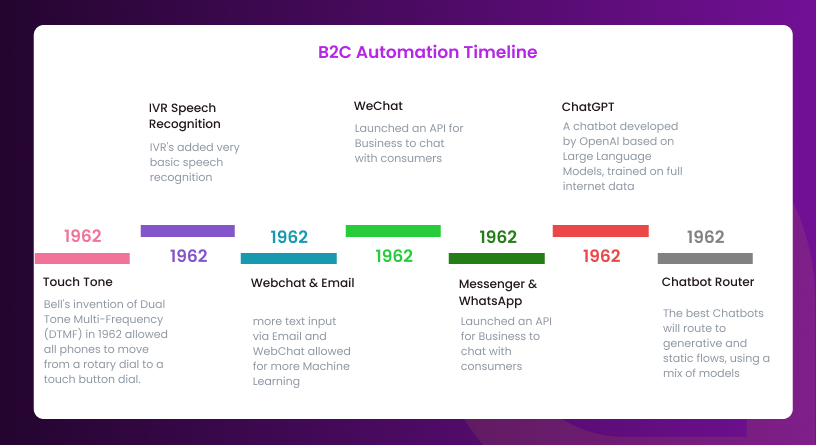
To understand why this comparison is so important we need to look at how communication between businesses and customers has evolved over time.
In the early days business communication was linear and slow. Customers sent an email or placed a call and businesses responded when they had time. There was no expectation of instant responses and even less of a requirement for any form of engaging experience. It was purely transactional.
The advent of real-time chat applications such as WhatsApp changed this. Communication was instant, casual and far more accessible. Businesses were able to respond immediately and customers welcomed the new ease of contact. Initially it felt like a huge step forward, and it was.
However, as digital ecosystems have evolved, customer expectations have continued to increase. Customers have engaged with multiple businesses on numerous platforms and they have witnessed faster responses, more intelligent systems and more personalized interactions. ” Instant responses” have long stopped being a feature and they are now the minimum acceptable requirement.
And herein lies the third stage of communication.
Businesses are no longer judged by their ability to respond quickly but rather by their capacity to effectively guide users. The modern website visitor does not simply expect a chat window but a sophisticated system that understands intent, facilitates discovery and nudges them toward action.
Simply put, customer communication is no longer about reactive replies, it is about strategic outcomes.
It is in this third phase of customer communication that the vast gulf between WhatsApp and Chattrik becomes clear.
WhatsApp for Business: Strengths, Familiarity, and Structural Limitations
WhatsApp has retained its market dominance as a business communication tool for very good reason.
The most obvious benefit is the vast user base, WhatsApp allows you to connect with billions of potential customers on a single platform. Customers don’t have to learn a new app or use an unfamiliar system; the learning curve is practically non-existent.
The second key strength is its familiarity. Customers are comfortable with using WhatsApp; they understand its functions, they trust the interface and they feel natural when using it. This reduced friction in communications can only be a positive.
WhatsApp also has high open rates meaning your message is far more likely to be seen compared to email, a crucial benefit when it comes to direct communication.
For a small business or individual working on a small scale these benefits alone might be enough. WhatsApp offers a straightforward way of communicating with customers.
However, as soon as you analyze WhatsApp from the point of view of growth, scalability and conversion rates its weaknesses begin to become apparent. The first is the extremely obvious one: WhatsApp is entirely reactive. It doesn’t proactively engage website visitors. It doesn’t qualify leads for you. It doesn’t prompt customers to act at the right moment. All these actions are left down to the customer.
This sounds fairly minor but this can result in significant lost opportunities, as many website visitors who are perfectly interested will never initiate contact.
The other major weakness of WhatsApp is its complete lack of any kind of structure that can lead to a conversion. Conversations are haphazard, often repetitive and require a high degree of manual input. Over time, teams will end up spending too much time on repetitive queries and leads will take too long to qualify and be nurtured towards purchase.
The most critical weakness in WhatsApp however is its inability to automate any processes efficiently. While the platform offers a number of built-in automated responses, it lacks any form of sophisticated multi-step workflows. It simply is not equipped for intelligent conditional logic and dynamic interaction sequences. As a result, businesses solely using WhatsApp are very quickly forced to grow with their team.
Chattrik: A Platform Designed for Conversion, Not Just Communication
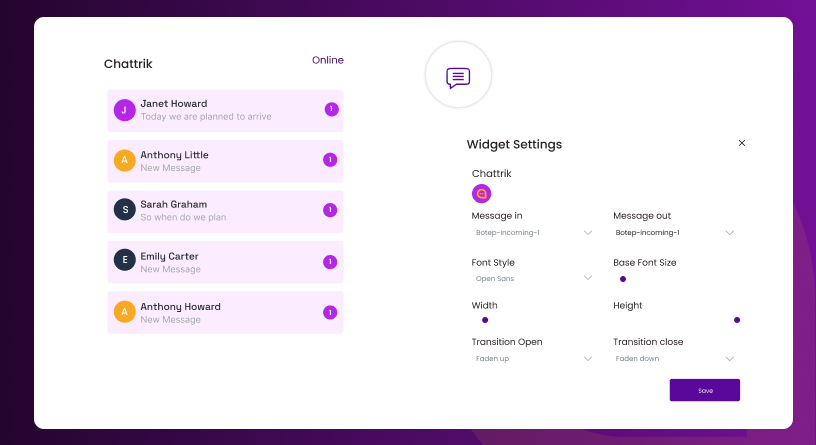
Chattrik takes an entirely different approach to communication with customers.
Instead of focusing on how fast you can reply, it is focused on how fast you can convert.
When you change this perspective everything changes.
The fundamental premise behind Chattrik is to operate within your website and with your customers in the flow of their experience. It does not wait for users to communicate, but actively engage with them. If a customer is browsing your products or spending a prolonged time on a page, Chattrik has the potential to initiate contact at the optimal moment in their visit.
This proactive form of engagement is one of Chattrik’s most powerful functions, turning passive traffic into active conversations, thereby increasing the likelihood of lead generation.
In addition to engagement Chattrik brings structure to your interactions. Instead of unhindered conversations, Chattrik gives businesses the ability to build a flow for the interaction, which can guide customers along in a step by step manner. These flows can be customized for lead qualification, information gathering, product recommendations and booking appointments.
Not only does this level of structure create greater efficiency but it also adds value to your customer’s experience. They are able to clearly interact with the system in a way that is guided towards the ultimate goal rather than relying on static and unhelpful responses.
The automation element of Chattrik differs from WhatsApp in that it goes far beyond simple responses and has the ability to build entire interactive workflows which can be utilized for multi step interactions, adapted for any customer situation.
Another key benefit Chattrik provides is visibility. Businesses gain a clear overview of their customers interaction with your system and see how each user is progressing, what responses they provide, and how these conversations lead to a conversion. This information is vital for your business to be able to refine interactions and develop strategies.
In its simplest form, Chattrik can be thought of not only as a communication tool but as a conversion driven system integrated into your digital experience.
The Underlying Difference Between Communication and Systems.
While on the surface it may appear that WhatsApp and Chattrik can be compared to each other simply because they are two communication platforms, their operations are far removed from each other.
WhatsApp is concerned with conversations and communication and is essentially a message sending and receiving platform. Everything beyond this communication has to be undertaken externally or manually, including lead qualification, follow up, analysis, tracking and optimization.
Chattrik on the other hand has been created to work as a system. It utilizes communication as part of the overall strategy of lead generation, automation, and analysis. Conversations with customers have a structure, which guides them through a user journey in order to achieve a specific objective.
There is a significant difference between communicating and managing a system of communication.
While communications may lead to the conversion of some prospects, you are largely dependent on chance and customer initiative. There is no specific pathway which they will follow and it becomes unclear why each potential lead has converted or failed to convert.
A system, conversely, allows you to clearly see what aspects of a workflow or system are succeeding and failing so you can begin to capitalize on effective elements. When there is less customer interaction needed, you can scale a particular system with more potential leads and thereby increase conversion efficiency. This is where businesses switching to systems such as Chattrik see considerable improvements, not necessarily by talking more, but by communicating more efficiently.
Practical applications in various industries.
These differences between the two communication platforms become far more obvious when considering their practical uses in various industries.
In the e-commerce space, it goes without saying that a customer’s browsing habits at the time of purchase are absolutely critical. If they have a question on a product, and it cannot be answered immediately, then you lose a potential customer as it will take far too long for a reply from a platform such as WhatsApp, but not from Chattrik.
A customer browsing a specific product on your website may well have a question or doubt about what they are looking for, an inquiry can be triggered on your website via a plugin that is running Chattrik, they can ask their questions about the product, or recommend an alternative and if necessary, offer a small incentive for immediate purchase. This reduces friction considerably and vastly increases conversion rates.
In Real Estate, for example, filtering prospects is critical. As many will contact a real estate agent simply out of curiosity; thus the time to identify serious clients must be minimized. A system like Chattrik can simplify this dramatically as it is able to guide users to a qualification phase in their search so that agents know who the ‘warm’ clients are.
Similarly, in service businesses, keeping track of all clients can be a difficult task, with appointment times and follow ups all having to be managed through a service like WhatsApp, it becomes extremely confusing, where as in the case of Chattrik, every conversation has a clearly defined outcome which can be managed.
Conclusion: The Future Belongs to Conversion-Driven Platforms
When looking into the future of communication and business, it’s extremely clear that communication in business is constantly evolving.
The goal now isn’t simply to communicate, or to be available, but to guide the conversation, manage it, optimize it, and ultimately use it as a method for increasing conversions. WhatsApp is, and will continue to be used for simple conversations between users; but the scope and purpose it provides for business operations is not sufficient enough to deal with a modern day digital experience.
Chattrik on the other hand has been designed and is in a prime position to deal with modern digital interactions as a result of the systems it integrates and utilizes.
While WhatsApp is an appropriate tool if your objective is simply to communicate with customers, your choice should become far more obvious if you aim to effectively grow, scale, and convert your customers.
Chattrik is not just a better system; it’s a better tool for doing it all.
 Table of Content